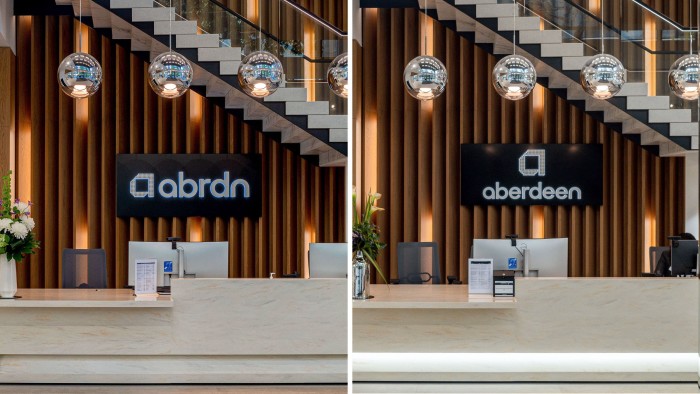
When UK asset manager Aberdeen Group renamed itself four years ago as Abrdn, the company said it had created “a highly differentiated brand”.
While the new moniker stood out, it was arguably for the wrong reasons. The fund group, which had been called Standard Life Aberdeen following a merger, was widely ridiculed for removing most of the vowels from its name.
Creating a “modern, agile, digitally enabled” brand was part of the stated rationale at the time, as was the lack of available internet addresses for more obvious choices such as Aberdeen.
But the derision over the rebrand eventually prompted chief executive Jason Windsor to reverse the decision of his predecessor, Stephen Bird, in an attempt to remove “distractions”. Aberdeen declined to comment.
So what can other companies learn from the episode? Michael Ruby, president of consultancy Park & Battery, says Aberdeen “is a well-established organisation that has tried to appear like an innovative fintech”. The effort failed because it generated a “cognitive dissonance” that “immediately screams they’re trying to play on a fad and it’s not authentic”.