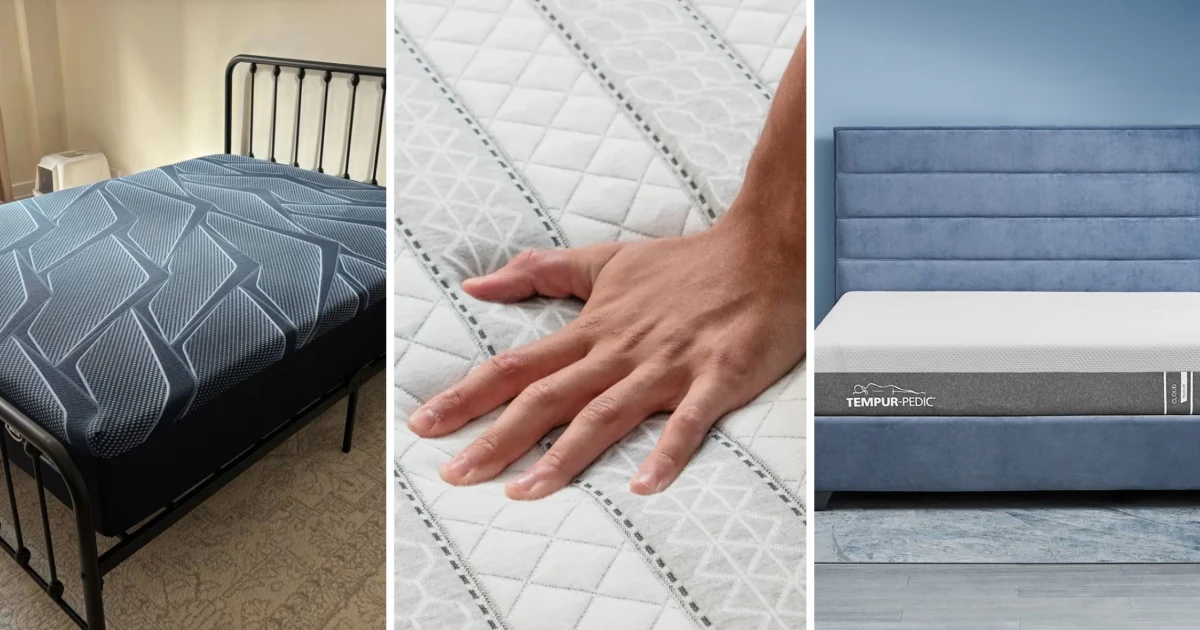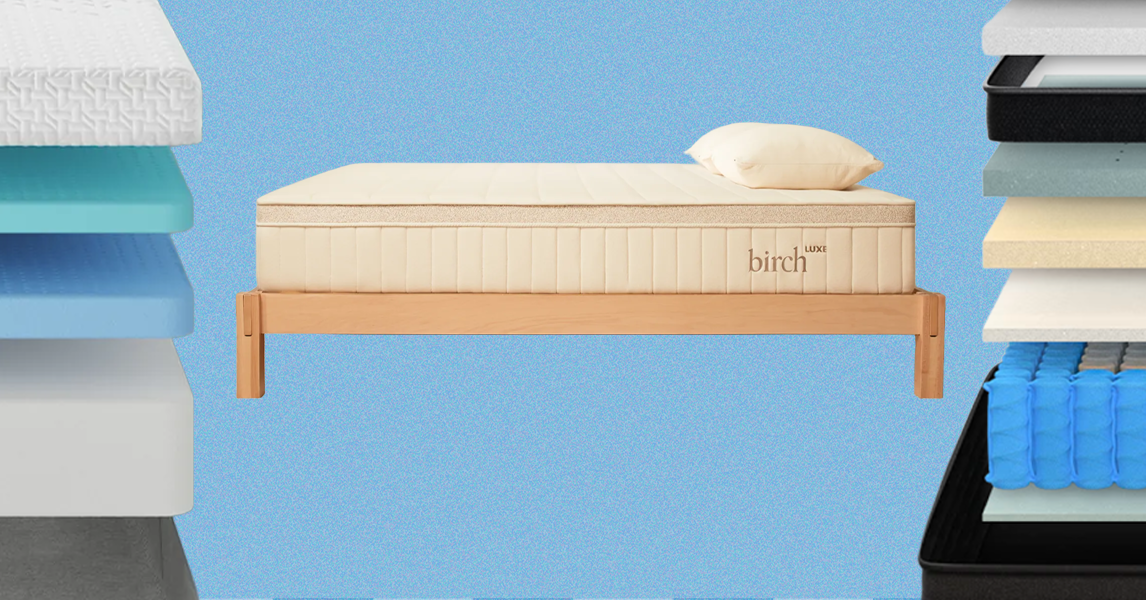
IF YOU'RE LOOKING to buy a mattress, I don't need to tell you the research process is complex. To assist with that, we have a whole guide that lays out (no pun intended … OK, partially intended) where to begin. But for now, I’m going to walk through the various types of mattress materials. My hope is that by the time you finish reading this, you’ll have a better idea of what kind of mattress you’re looking for, which will make your final decision that much easier.
To put your mind at ease, let me walk you through my credentials: I'm a certified Sleep Science coach and mattress tester of over five years. I can dissect a mattress blueprint faster than pouring your morning cup of coffee, I've perfected my unboxing form (because mattresses are heavy), and I can recite the manufacturing process of major mattress materials at any given moment. It's a fun party trick, but it makes me what I like to think of as the final boss of mattress testing. My teammates also know their stuff (we sleep on mattresses we test for a week or more, then report back on our findings), which helped us compile this list of the best mattresses of 2025.
So, back to picking a type of mattress: Despite the popularity of mattresses in a box and the image they project in our heads, it’s so much more than a rectangular piece of foam you sleep on. There are four main types of mattresses: innerspring, hybrid, memory foam, and latex. To help me explain these materials even more, I asked John Merwin, CEO of 3Z Brands (parent company of Helix, Birch, Bear, Nolah, and Leesa) and founder of Brooklyn Bedding, to weigh in as well.