https://arab.news/bfgw2
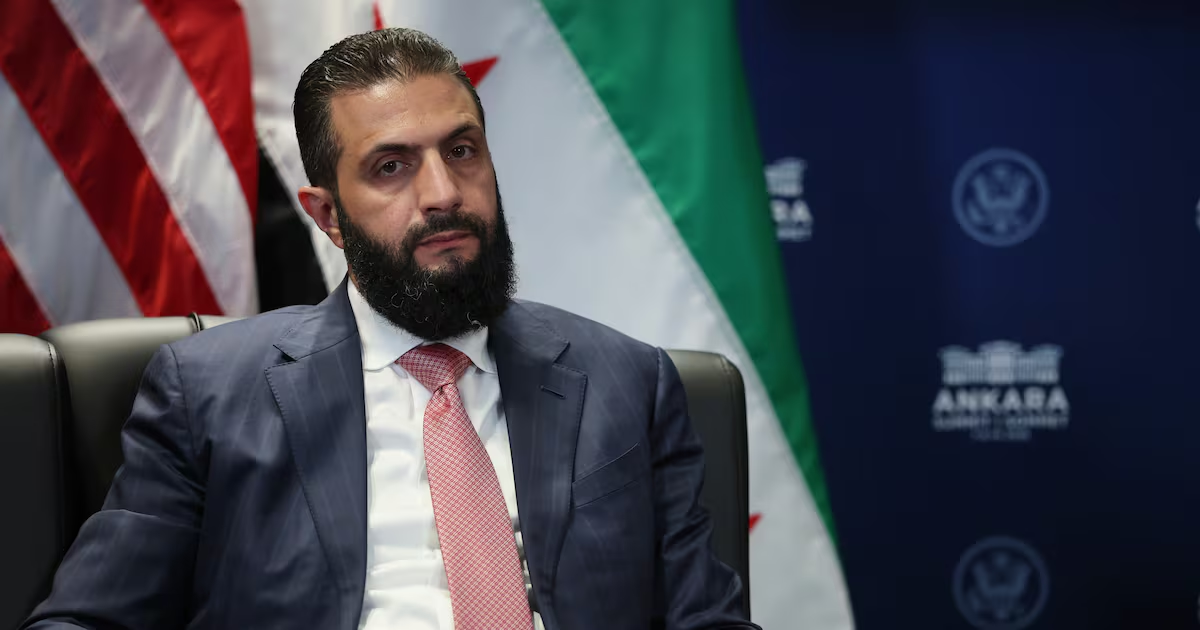
The Trump administration’s decision to withdraw 500 troops from eastern Syria in April, and its stated aim of drawing down more, appears part of a broader shift in US policy toward Syria. In the immediate aftermath of Bashar Assad’s fall, Washington seemed hostile toward the new regime. Officials expressed concern about the background of Syria’s new president, Ahmad Al-Sharaa, and warned Damascus about the fate of Syria’s minorities and the possible resurgence of Daesh. Yet, in recent months, President Donald Trump has agreed to drop sanctions on Syria and appointed a new envoy to Damascus, as well as reducing the US’ military footprint in the east.
This does not necessarily indicate that the US is embracing Al-Sharaa, despite Trump’s complimentary words when they met in Riyadh. Instead, it seems the White House is “de-prioritizing” Syria: reducing both its hostility, in the form of economic and diplomatic sanctions, and its military presence. This will be welcomed by Damascus, but also by the new leadership’s principal regional ally, Turkiye. Indeed, Ankara appears to be the major beneficiary of the new US approach.
The de-prioritizing has three primary strands. The first was to begin lifting sanctions. After his surprising meeting with Al-Sharaa in Saudi Arabia, Trump agreed to remove the sanctions crippling Syria’s economy, arguing it “would give them a chance.” As well as granting immediate sanction relief in late May, the White House is reportedly preparing an executive order that will permanently rescind a raft of economic restrictions.