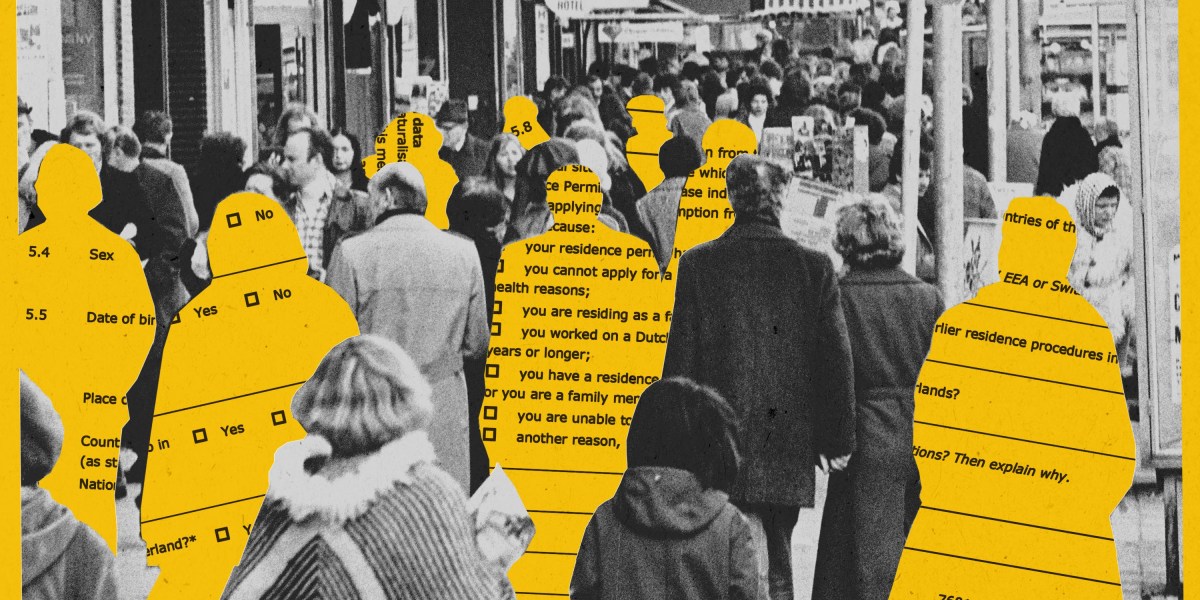
Amsterdam’s struggles with its welfare fraud algorithm show us the stakes of deploying AI in situations that directly affect human lives.
What Amsterdam’s welfare fraud algorithm taught me about fair and responsible AI.
Back in February, I flew to Amsterdam to report on a high-stakes experiment the city had recently conducted: a pilot program for what it called Smart Check, which was its attempt to create an effective, fair, and unbiased predictive algorithm to try to detect welfare fraud. But the city fell short of its lofty goals—and, with our partners at Lighthouse Reports and the Dutch newspaper Trouw, we tried to get to the bottom of why. You can read about it in our deep dive published last week.
For an American reporter, it’s been an interesting time to write a story on “responsible AI” in a progressive European city—just as ethical considerations in AI deployments appear to be disappearing in the United States, at least at the national level.
For example, a few weeks before my trip, the Trump administration rescinded Biden’s executive order on AI safety and DOGE began turning to AI to decide which federal programs to cut. Then, more recently, House Republicans passed a 10-year moratorium on US states’ ability to regulate AI (though it has yet to be passed by the Senate).