A new trail follows the 26-mile route of the world’s first passenger train journey on the Stockton and Darlington Railway
I
t was as strange a sight as you could stumble upon in the English countryside. As a muggy summer’s day began outside Shildon, Durham – rain threatening, bees drowsy in the hedgerows – I found myself standing on an embankment, surveying two rows of colossal stone teeth jutting through the earth. It looked as if someone had buried a sleeping giant.
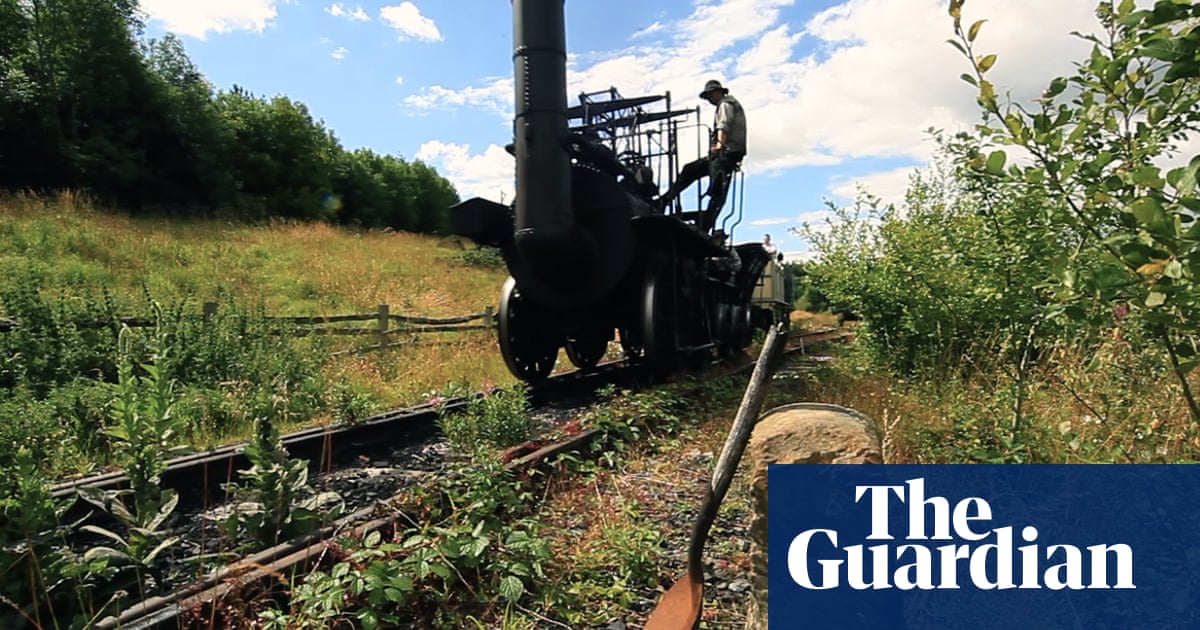
“You wouldn’t believe it by looking at it, but this is one of railway history’s most amazing feats,” my companion, rail expert Richie Starrs, said as we gazed down at the molars beneath our feet. A closer look revealed they were abandoned rail sleepers, laid out between the hawthorns and along which coal wagons were once pulled uphill by steam traction locomotives. “This is the Brusselton Incline, a section of the original Stockton and Darlington Railway. Nationally, it’s a story that’s not well known, but it’s one we’re rightly proud of.”
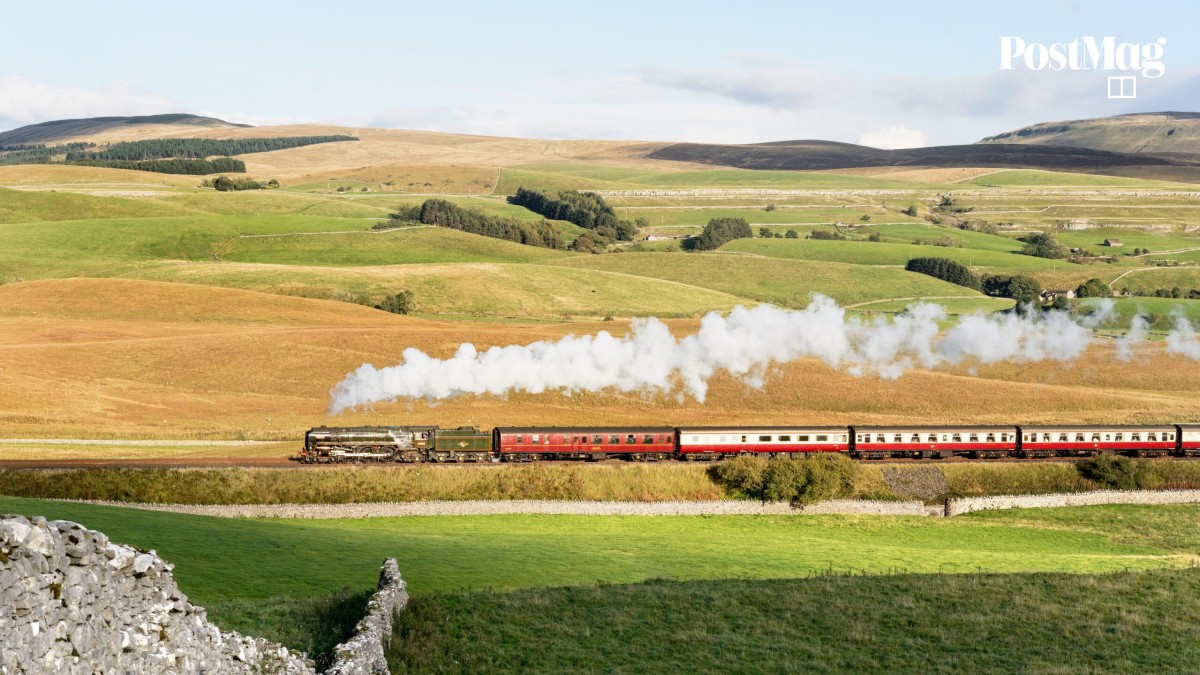
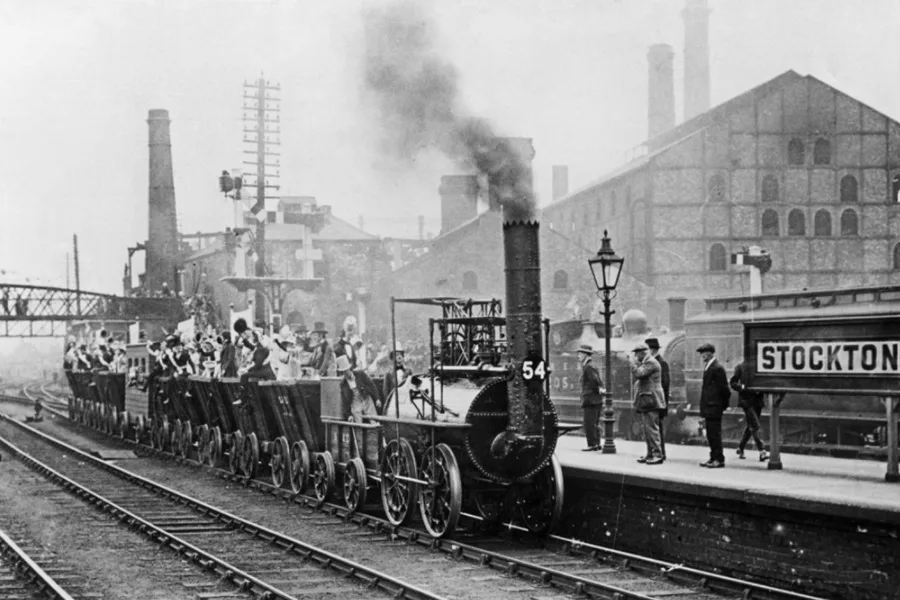
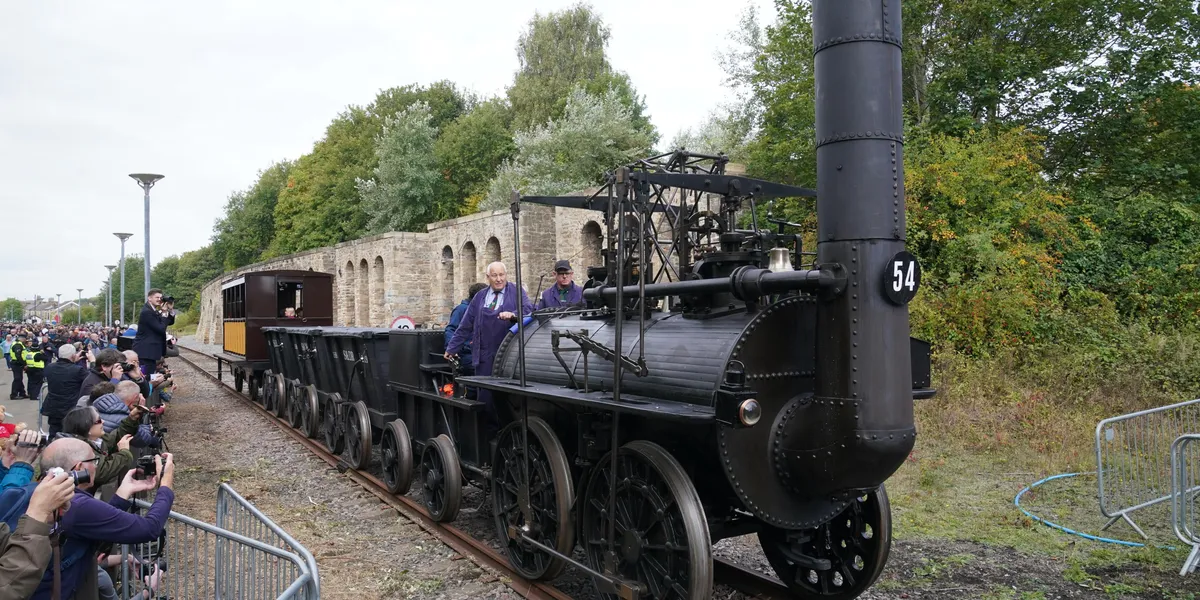
For those interested in such rail history, this is a year like no other. Two hundred years ago, on 27 September 1825, the 26-mile Stockton and Darlington Railway opened as the world’s first public railway, making Shildon the world’s first railway town. And the lessons learned there helped the north-east, then Britain, Europe and the world grasp the importance of rail travel, first for transporting coal and lime, then, decisively, for passengers. It is “the railway that got the world on track”.