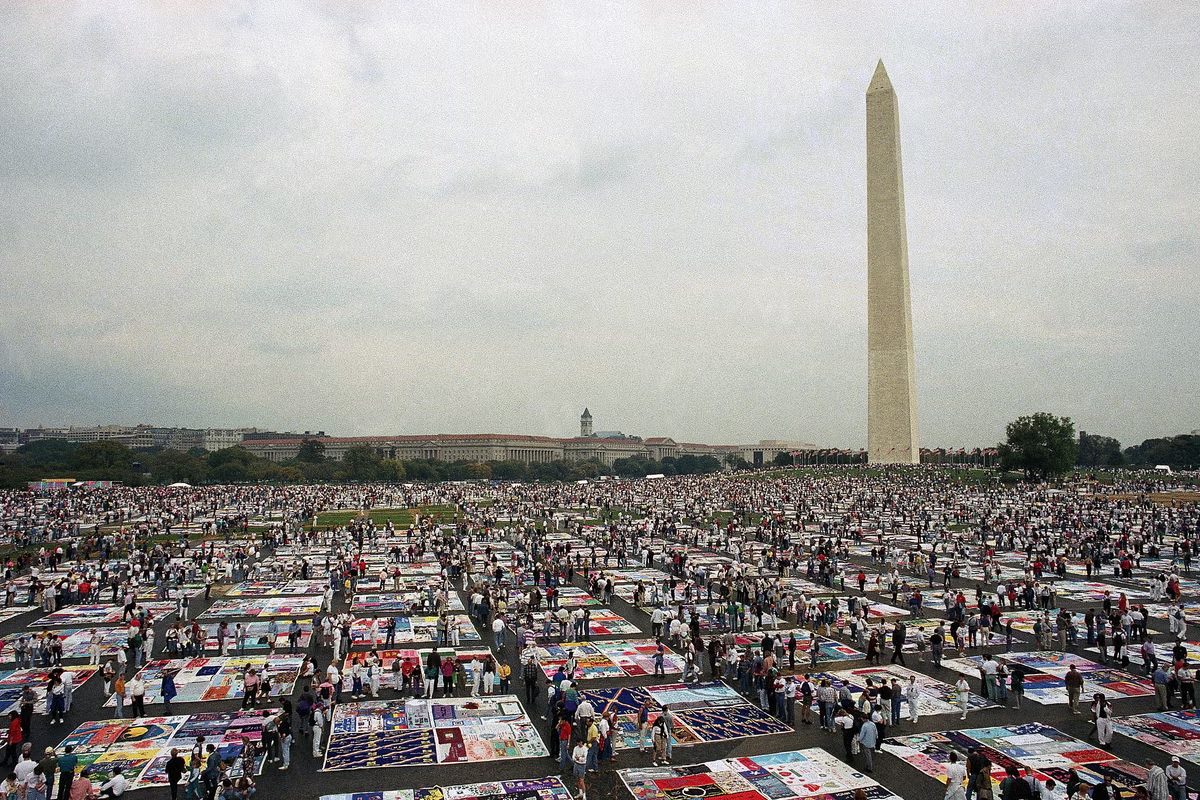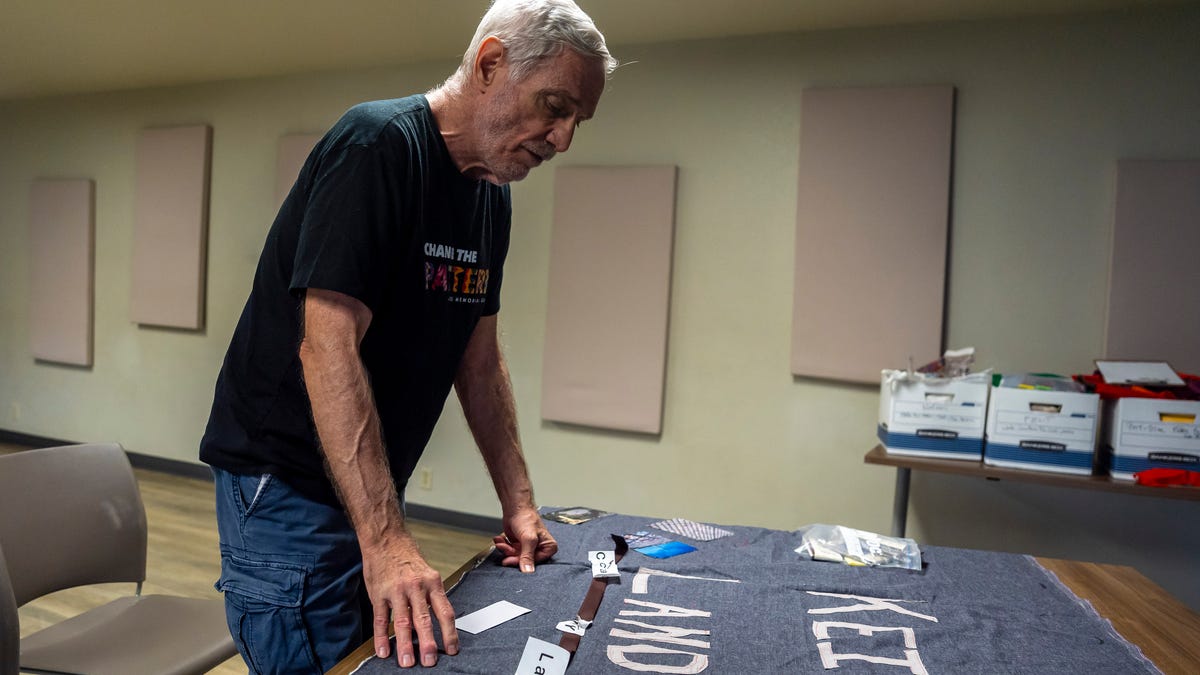
It began as a simple act of remembrance, dedicated to those who lost their lives to Aids. Now this ever-growing patchwork of gravestone-sized panels has taken on new meaning as one of the most significant artworks of the past 40 years
A
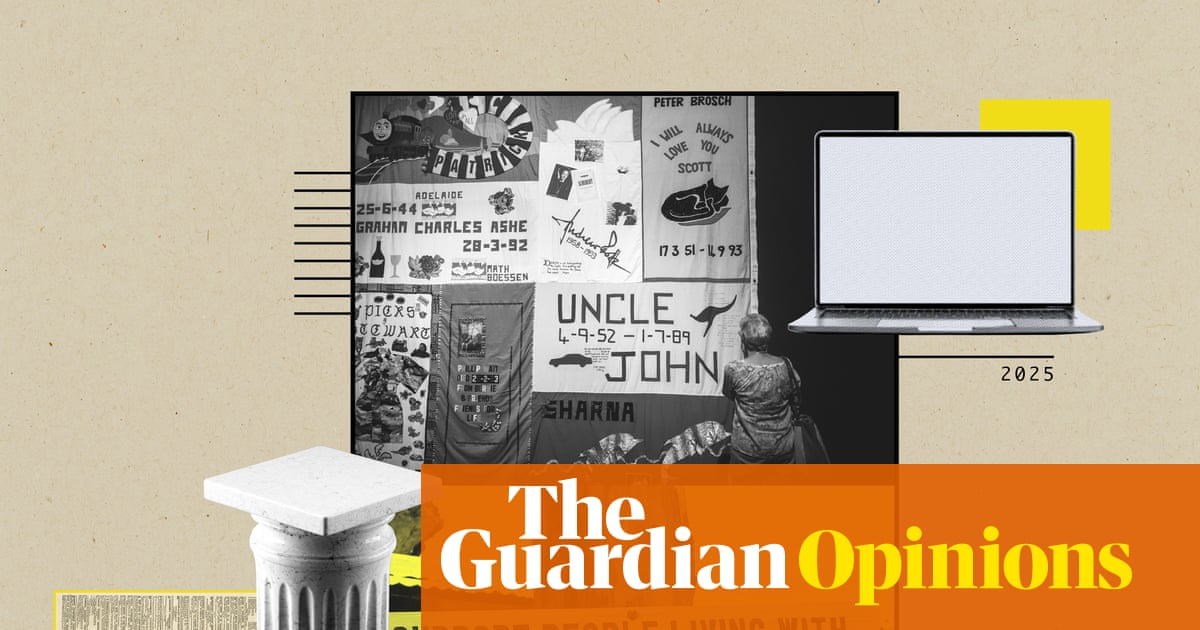
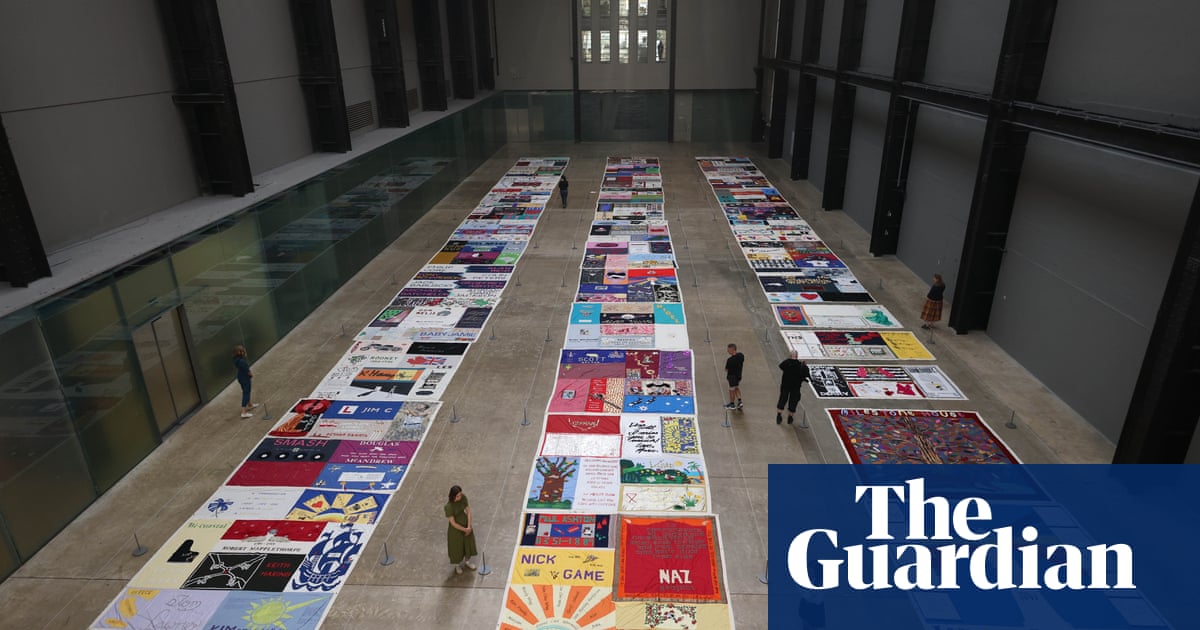
young man is standing face to the wall. He is sobbing, being consoled by friends. An older gay couple walk slowly, hands gripped together, supporting each other. Groups of young queer friends are arm-in-arm, united in grief. In front of them is the UK Aids Memorial Quilt, its panels sewn with images and messages: “Malcolm”, reads one, “I wish that I had known you longer.” Another panel is dedicated to “those rejected, denied, alone”. Another reads simply, “Dear Scott, I miss you so much!”
Over the past few days, more than 20,000 people have visited Tate Modern’s Turbine Hall to see the quilt. Many of those visitors have wept openly in its presence, spending hours in the space. The atmosphere has been hushed, reverential. Some said on social media later that it was the best thing they’d ever seen at the Tate.
The response suggests it is one of the most significant pieces of British art made in the past 40 years. And yet it is not like other artworks. It has countless makers, many unknown, many of whom will never have made or will make art again. It is unfinished, still being made. This art has no discernible monetary value, nor does it seek one: its purpose is much more transcendent. Until this display, the work had never been shown in its entirety in an art institution. It makes us question our understanding of what gets to be considered art. And yet, its future is unclear.