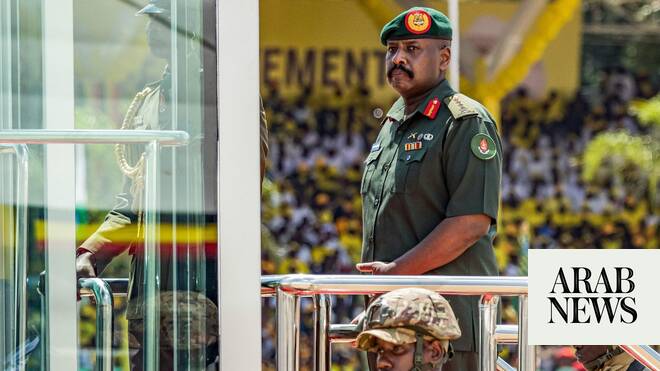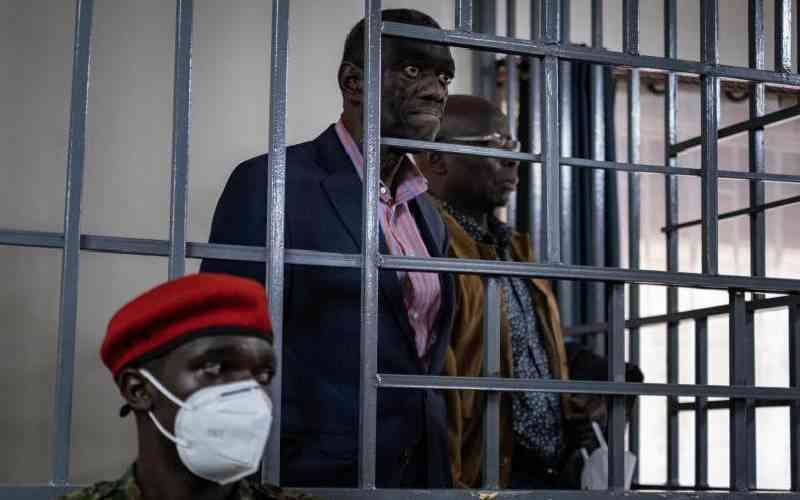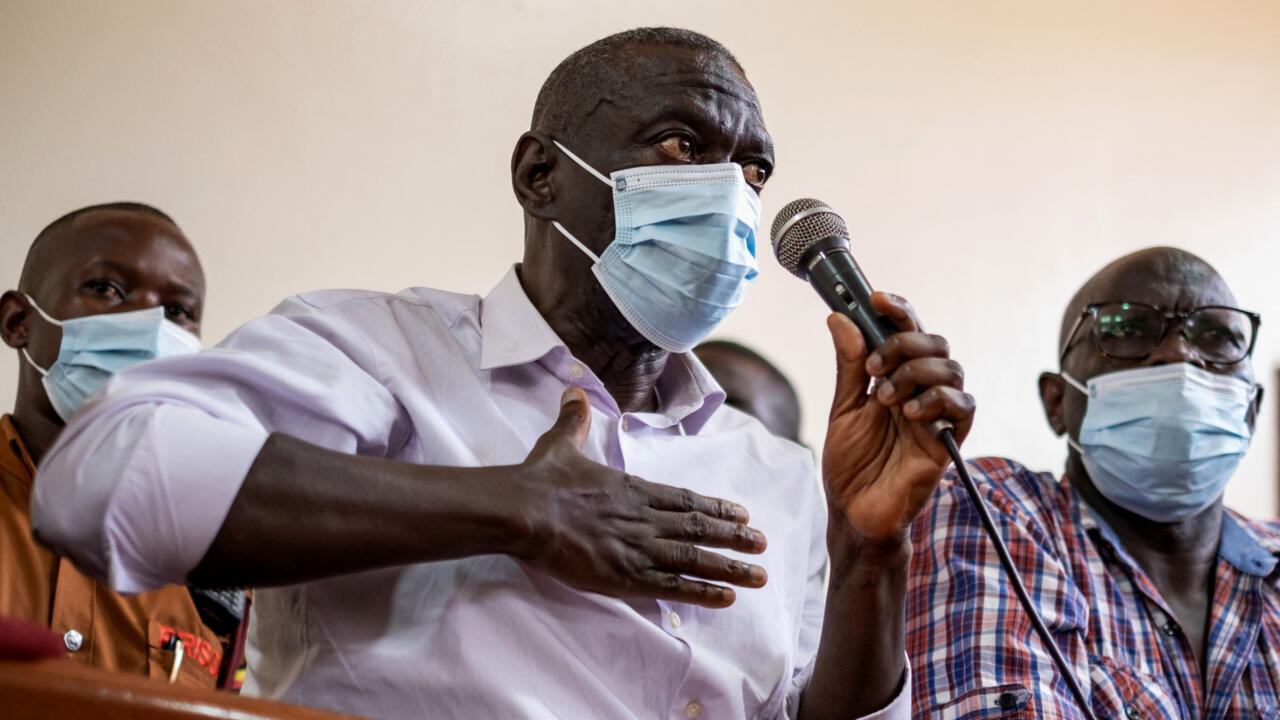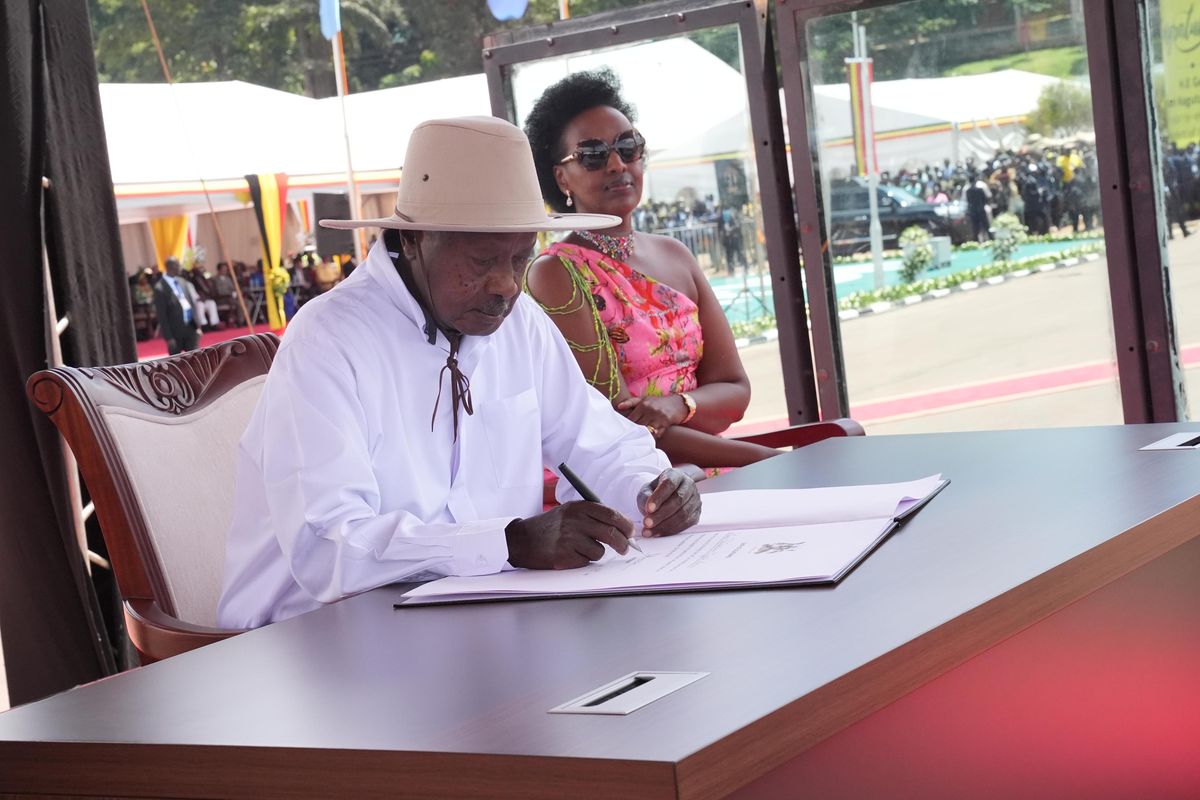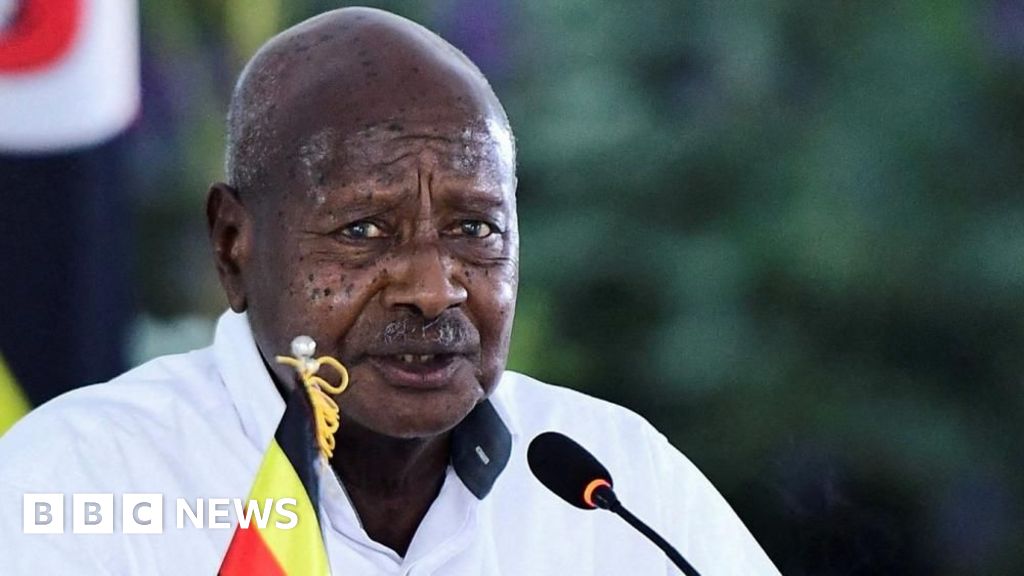
17 June 2025Swaibu IbrahimBBC News, KampalaReutersPresident Museveni has previously defended the use of military courtsUganda's President Yoweri Museveni has signed into law an amendment that will allow, once again, civilians to be tried in a military court under certain circumstances.A previous law permitting such trials was ruled unconstitutional by the Supreme Court in January.Parliamentarians passed the amendment last month amid a heavy police presence and a boycott by opposition lawmakers, who argued that it violated the ruling by the country's highest court.In January, the judges said that the military courts were neither impartial nor competent to exercise judicial functions, the International Society for Human Rights reported at the time.The amendment appears to try and address some of the issues. It says that those presiding over the tribunals should have relevant legal qualifications and training. It also says that while performing their legal functions they should be independent and impartial.But civilians can still be transferred if found with military hardware."The law will deal decisively with armed violent criminals, deter the formation of militant political groups that seek to subvert democratic processes, and ensure national security is bound on a firm foundational base. If it ain't broke, don't fix it!," army spokesperson Col Chris Magezi wrote on X after the bill was passed by MPs.But opposition leader Bobi Wine said the law would be used against him and others. "All of us in the opposition are being targeted by the act," he told the AFP news agency.The Uganda Law Society, a professional body that represents the country's lawyers, has said it will "challenge the constitutionality" of the amendment.For years, activists had argued that the military courts were being used by the government to silence dissidents, with people alleging that evidence had been planted."If you are a political opponent then they will find a way of getting you under the military court and then you know your fate is sealed... once there, justice will never visit your door," human rights lawyer Gawaya Tegulle told the BBC's Focus on Africa podcast in February.He added that people can spend years in detention on remand as the courts await decisions from senior military figures, which may never come, and those who are tried and found guilty face harsher penalties than in civilian courts.A recent high-profile case followed November's arrest of long-time leading opposition figure Kizza Besigye. He was picked up in neighbouring Kenya, taken across the border and then charged in a military court with possession of pistols and attempting to purchase weapons abroad, which he denied.Those charges were dropped, and replaced with others, when his case was transferred to a civilian court following the Supreme Court ruling.He said that civilian courts were too busy to "handle these gun-wielding criminals quickly".More Uganda stories from the BBC:How Besigye disappeared in Kenya and ended up in military courtHow an ex-rebel has stayed in power for more than 30 yearsMuhoozi Kainerugaba - Uganda's ambitious tweeting generalGetty Images/BBCBBC Africa podcasts
Uganda President Yoweri Museveni signs new law allowing military trials for civilians
A previous law that activists said was used to silence opponents was struck down by the Supreme Court.
490 words~2 min read