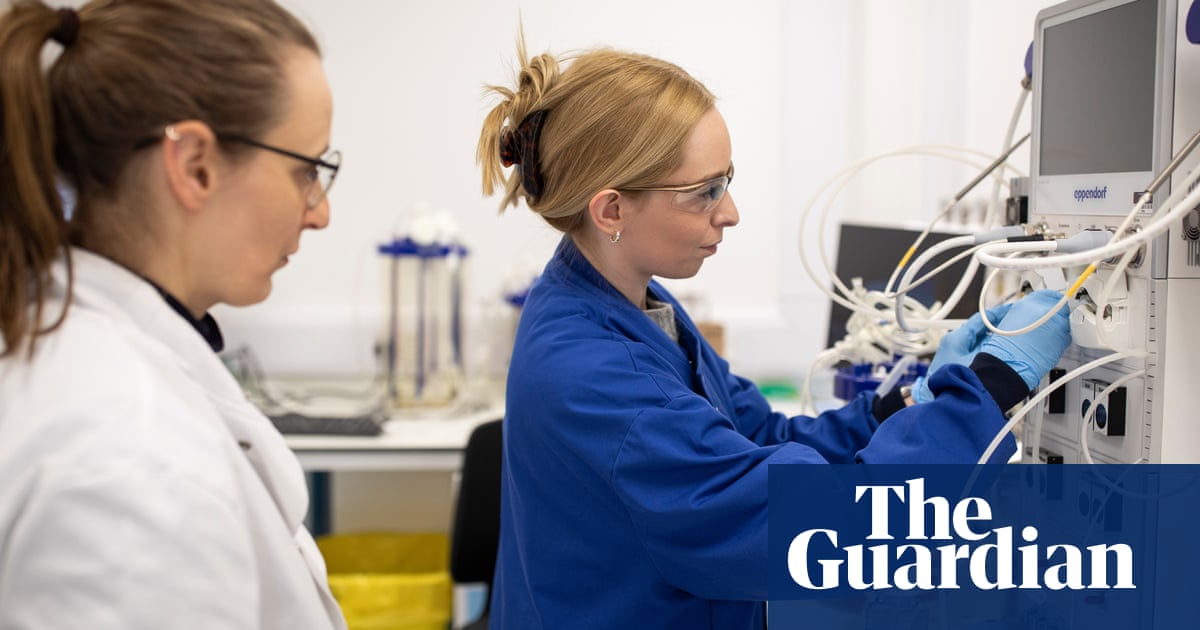
AviadoBio’s breakthrough therapy hopes to stop progress of FTD, which is usually diagnosed in people under 65
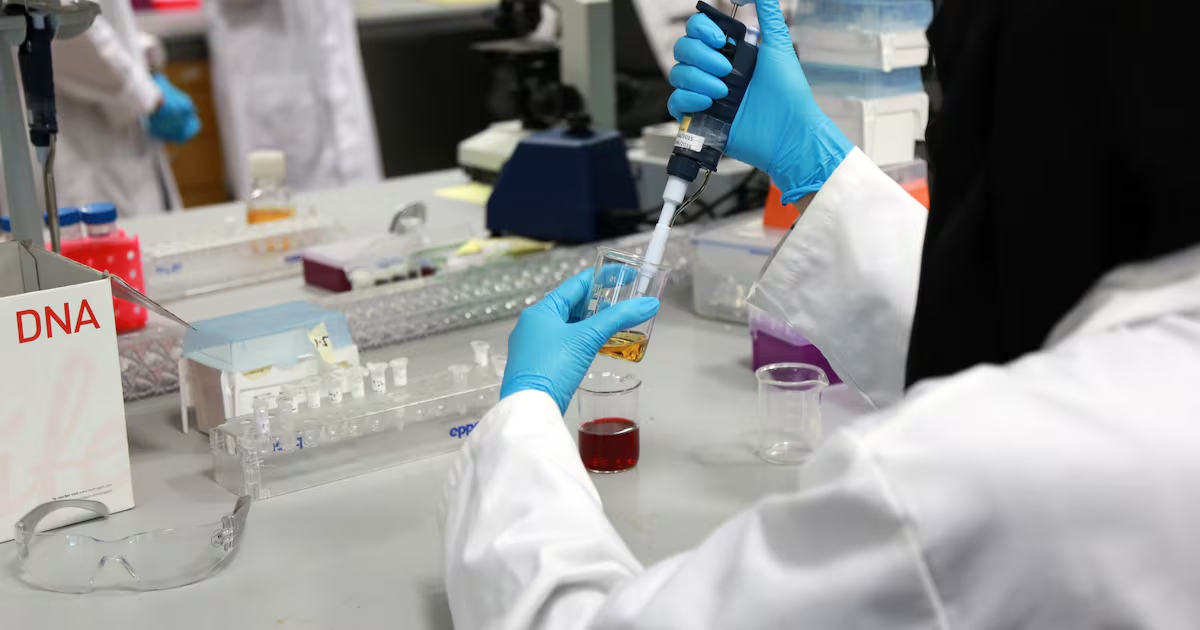
Behind the gleaming glass facade of an office block in east London’s Docklands, Dr Martina Esposito Soccoio is pipetting ribonucleic acid into test tubes.
Here, not far from Canary Wharf’s multinational banks, a British university spinout is working on a breakthrough treatment for a form of dementia that affects millions of people worldwide.
There is no cure for dementia at present, but scientists at AviadoBio hope their clinical studies can stop the progression of a particular genetic type of frontotemporal dementia (FTD).
“It may be one of the first dementias to have a definitive treatment, a cure if you like, a really transformative treatment that allows people to live much longer and much more normal lives,” says Prof James Rowe, a consultant neurologist at Cambridge’s Addenbrooke’s hospital.