With the beauty-gadget industry growing at four times the rate of the overall skincare category, with sales projected to hit $92.55 billion by 2028, it seems to be becoming the favoured option for people who want the results of a visit to the aesthetician, but prefer less invasive approaches.
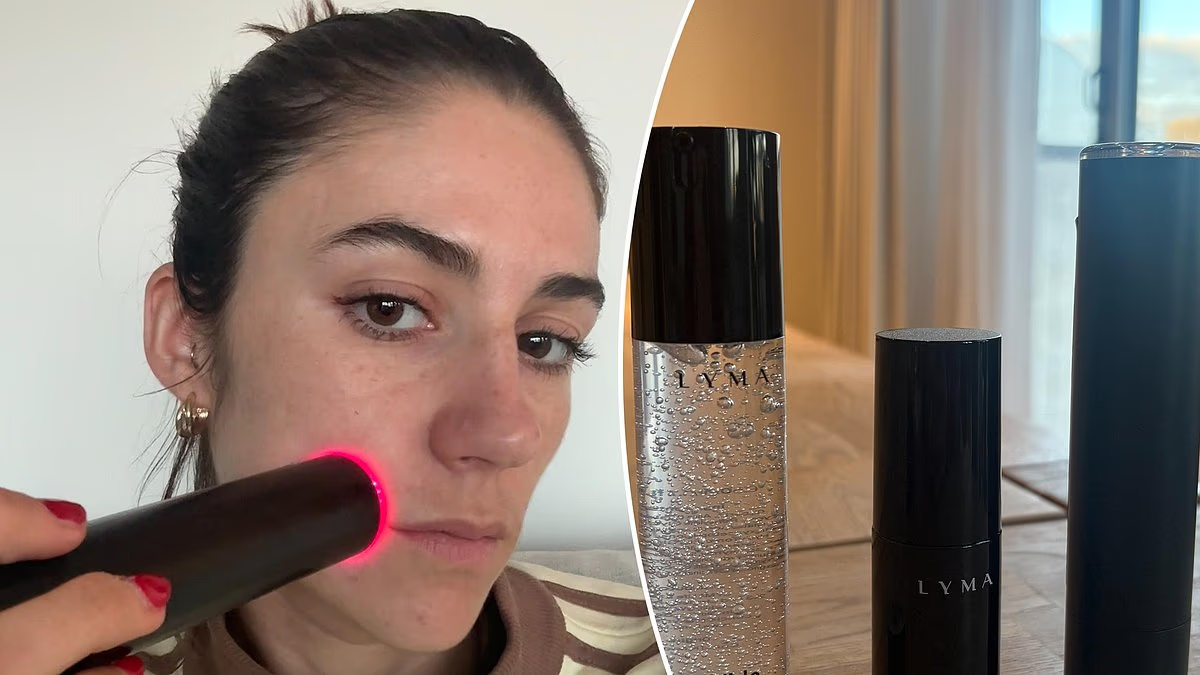
As a result the British wellness brand LYMA is doing better than ever. Founded in 2018, its initial offering was the LYMA supplement, a gold-coloured capsule containing active ingredients formulated to be bioavailable and therefore fully absorbed by the body. Despite coming at a price — around £199 for a month’s supply — the pills frequently sold out and were nicknamed the “supermodel supplement” to those in the wellness world. Unsurprisingly, LYMA loyalists were thrilled when LYMA dropped its first at-home clinic-grade laser in 2020, the launch helped LYMA receive a 40 per cent increase in turnover to £32.5 million, with US sales accounting for 70 per cent of their total revenues.
Now the range includes both the original LYMA laser as well as the LYMA Laser Pro which launched in March 2024. Both use technology called low-level laser therapy (LLLT) first developed in the 1960s which was previously used to treat medical injuries such as healing tendons and rebuilding cartilage. The founder of LYMA, Lucy Goff, decided to harness this existing technology and re-engineer it for the cosmetic market, creating a portable, cordless device that could be used at home without the supervision of a doctor or a prescription*. Goff consulted geneticists, longevity scientists and surgeons and spent five years developing the laser.