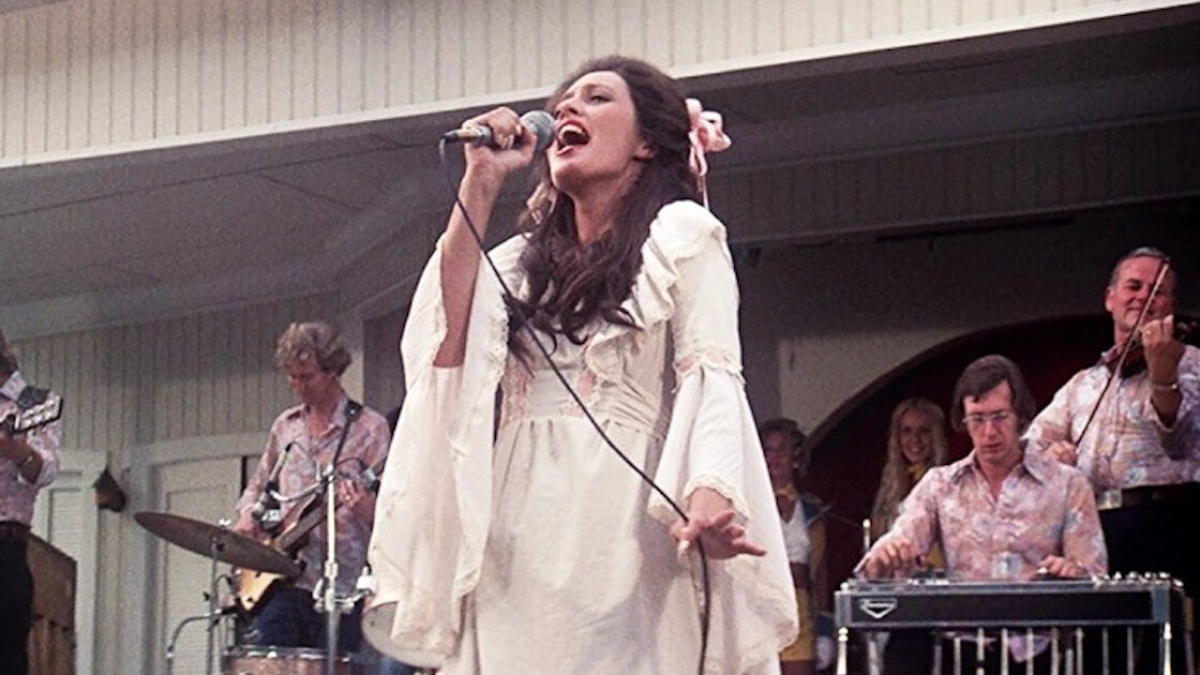
The director’s immersive look at the Nashville music scene remains an audacious narrative experiment that continues to influence film-makers
R
eleased smack-dab in the middle of the 70s, like some gravitational mass at the center of the galaxy, Robert Altman’s Nashville is the defining work of a decade when iconoclasts upended Hollywood and took stock of the country during a turbulent stretch.
For Altman, it was the culmination of a film-making style he had been refining since M*A*S*H in 1970, one built on spontaneity, a rich evocation of time and place, and actors empowered to create characters who seem to simply exist in their worlds, rather than impose themselves on it. The offhand magic of Nashville is that it feels modest, despite a who’s who of two dozen stars convening for an epic that offers Music City as a microcosm for America herself. Rarely are great films this casually profound.
Fifty years later, Nashville has pollinated many more ensemble productions that brings their casts together under a large thematic umbrella, including plenty more from Altman, such as A Wedding, The Player, Short Cuts and his swan song, A Prairie Home Companion. But while other films of the era had attempted to work on a similar scale, like Irwin Allen disaster pictures or Stanley Kramer productions, Altman was attempting to reinvent what films could be, which proved a much harder path, even at a time when the auteur lunatics were running the studio asylum. Though Nashville turned out to be the rare Altman hit, it was bankrolled by a record company. Hollywood didn’t have the nerve for Altman’s narrative experiment.