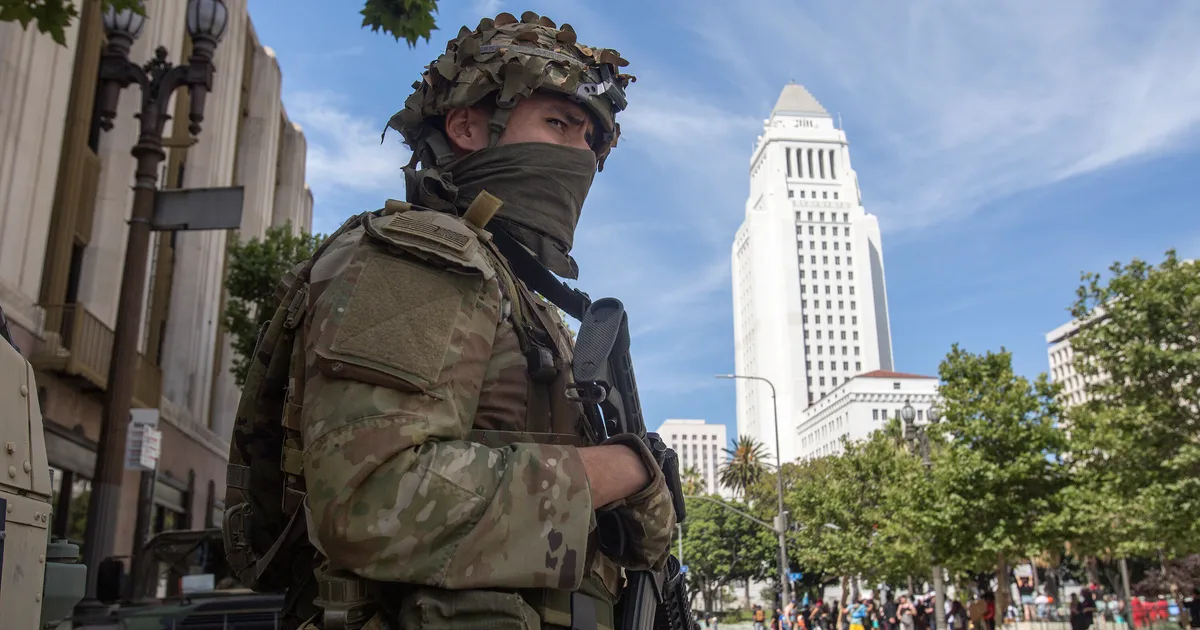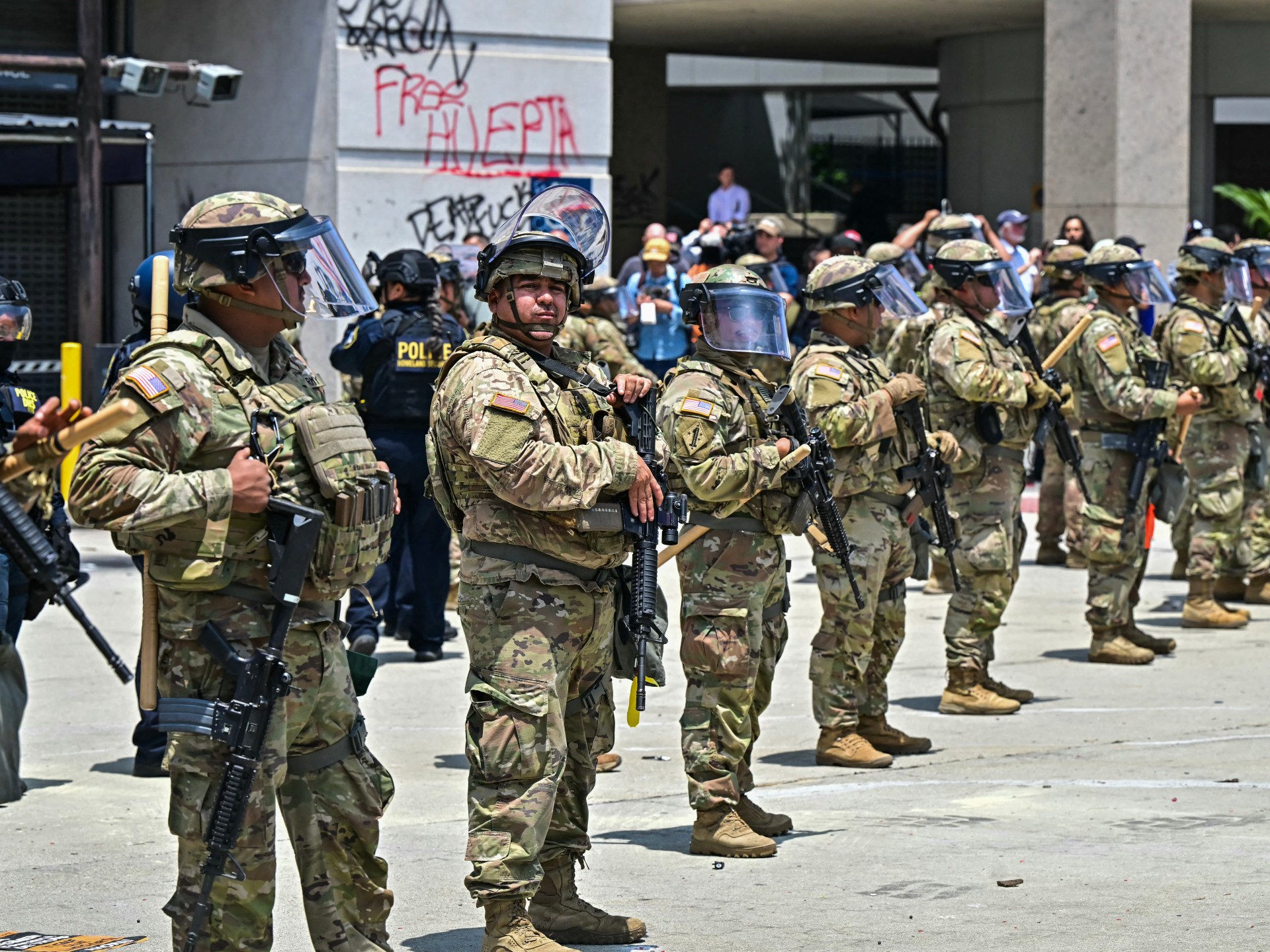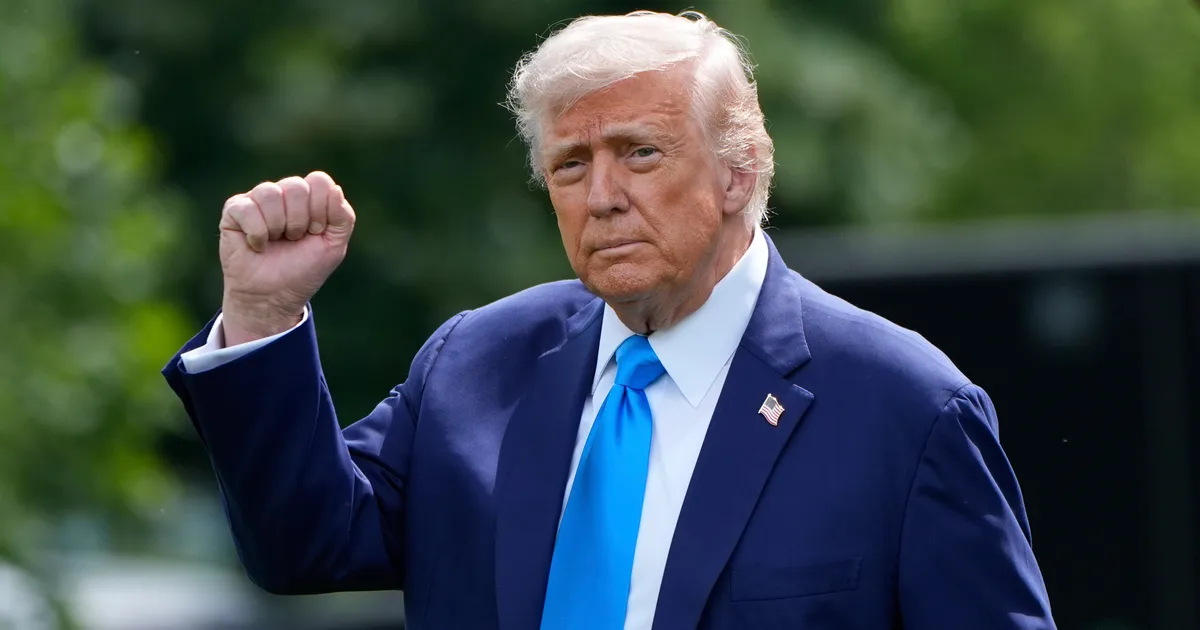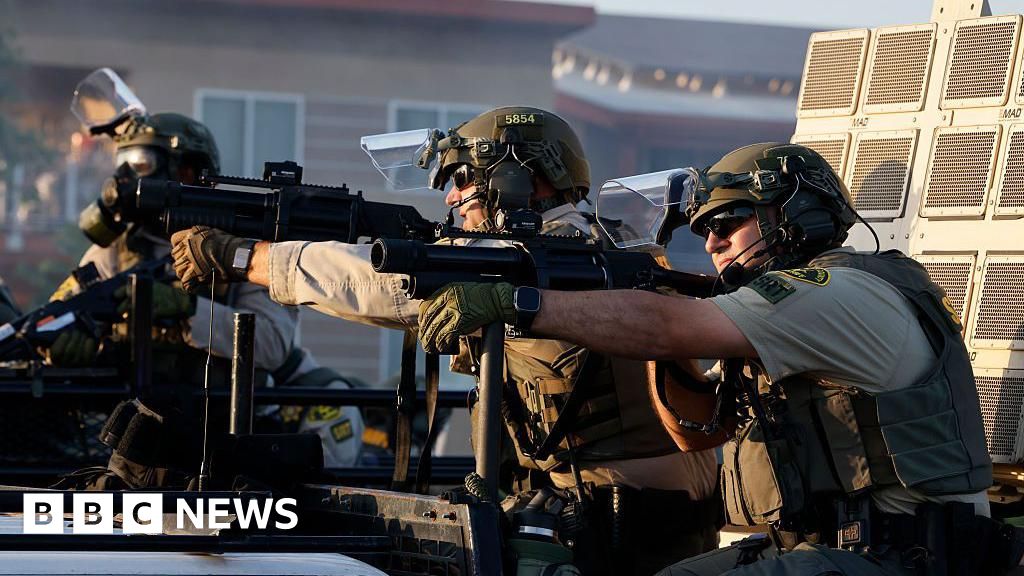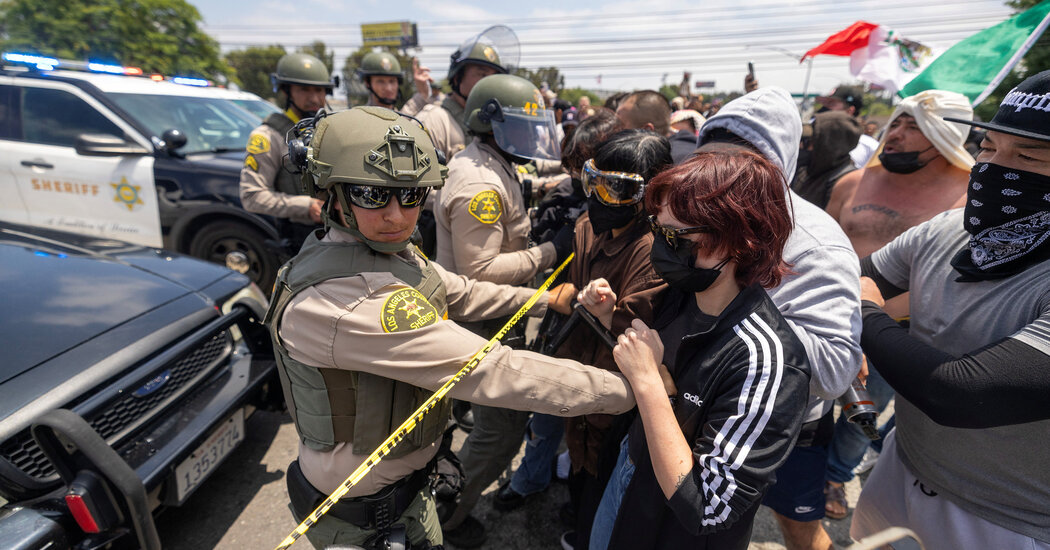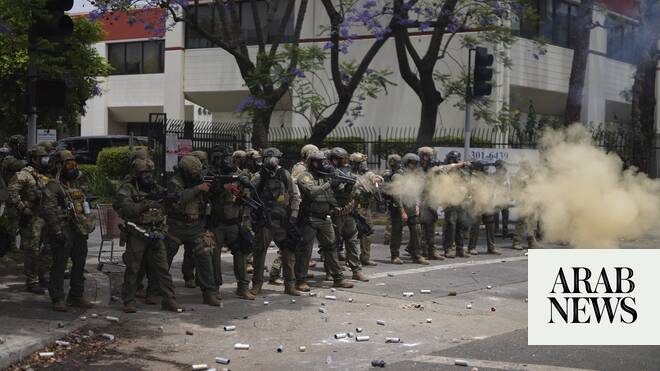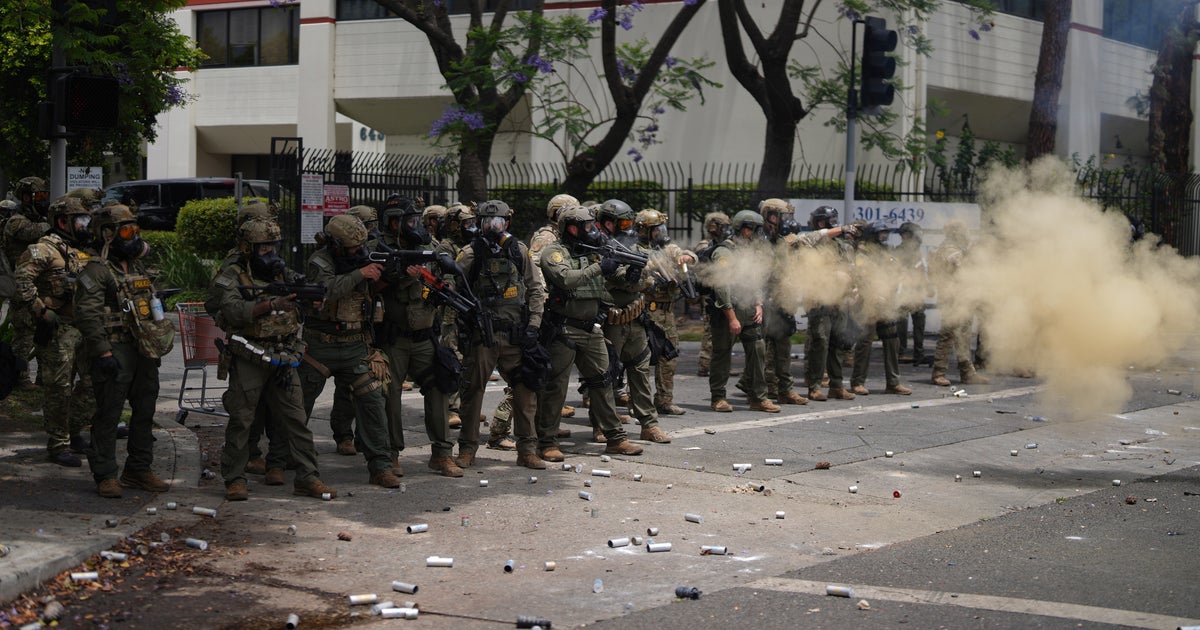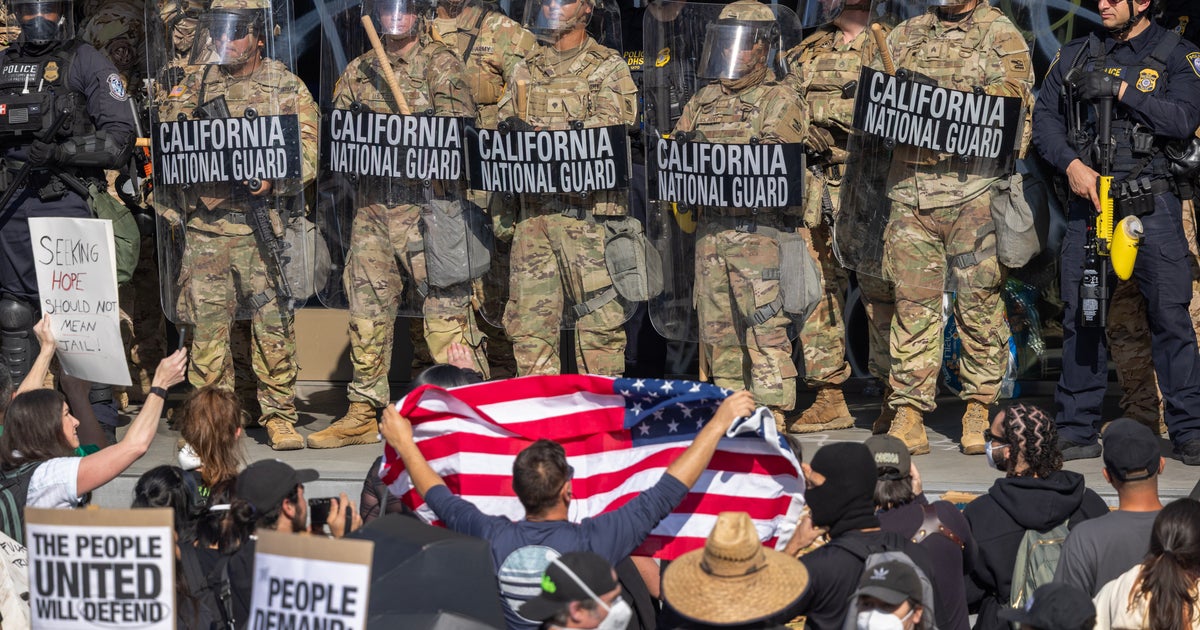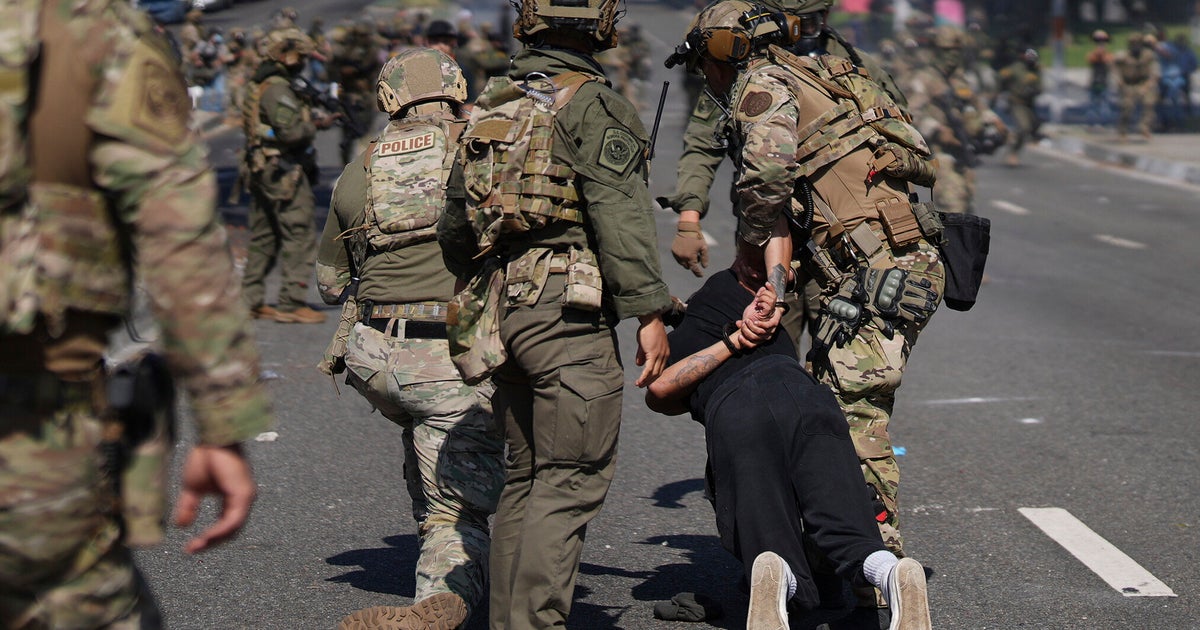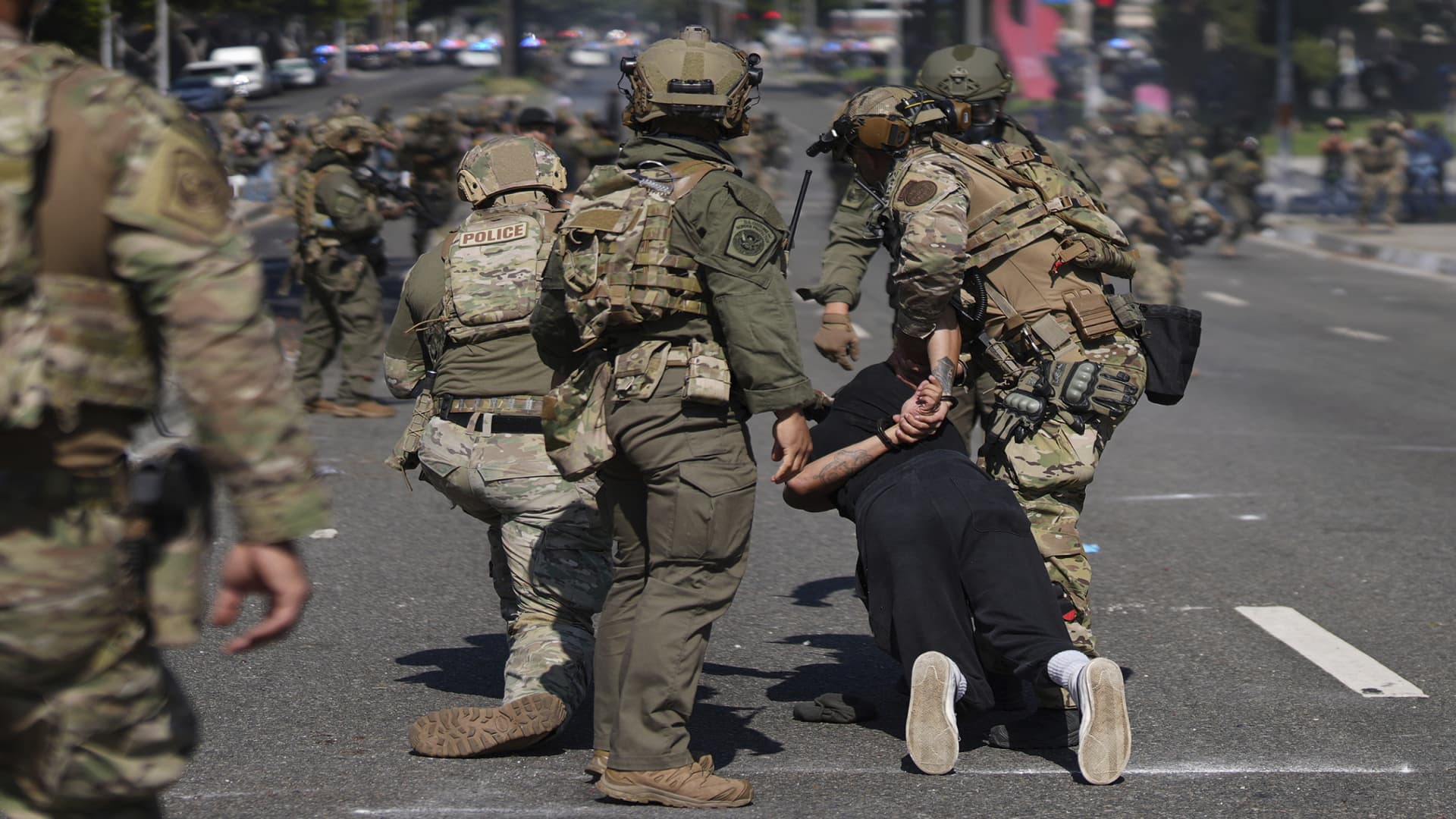
President Donald Trump says he’s deploying 2,000 California National Guard troops to Los Angeles to respond to immigration protests, over the objections of California Gov. Gavin Newsom.
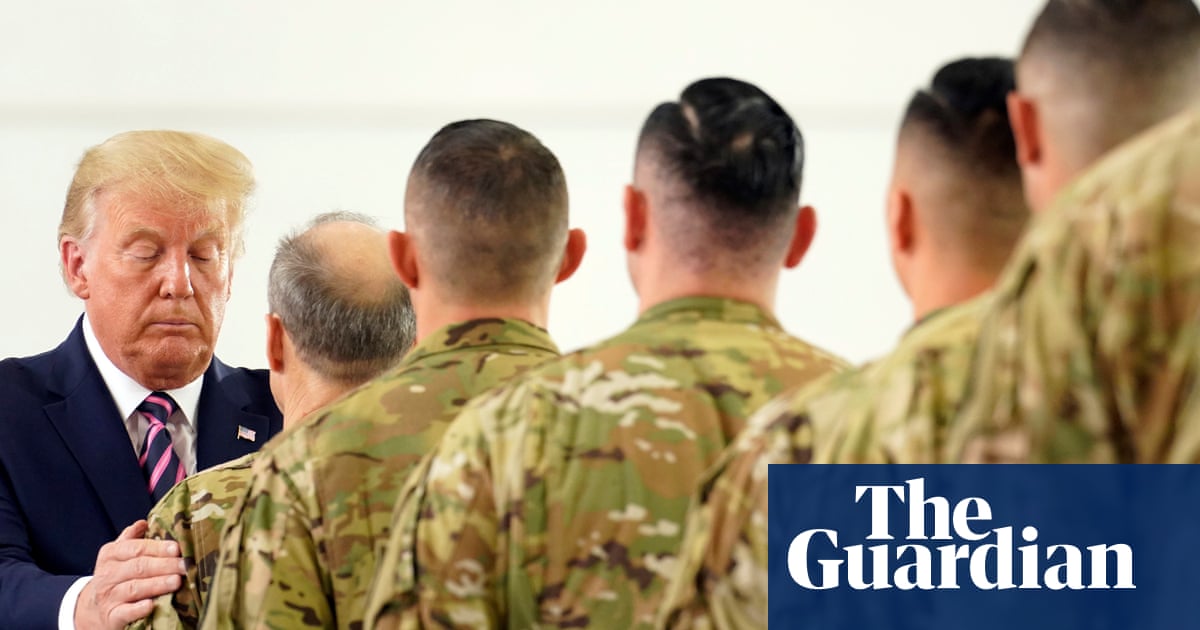
It’s not the first time Trump has activated the National Guard to quell protests. In 2020, he asked governors of several states to send troops to Washington, D.C. to respond to demonstrations that arose after Minneapolis police officers killed George Floyd. Many of the governors he asked agreed, sending troops to the federal district. The governors who refused the request were allowed to do so, keeping their troops on home soil.
This time, however, Trump is acting in opposition to Newsom, who, under normal circumstances, would retain control and command of California’s National Guard. While Trump said that federalizing the troops was necessary to “address the lawlessness” in California, the Democratic governor said the move was “purposely inflammatory and will only escalate tensions.”
Here are some things to know about when and how the president can deploy troops on U.S. soil.
Generally, federal military forces are not allowed to carry out civilian law enforcement duties against U.S. citizens except in times of emergency.