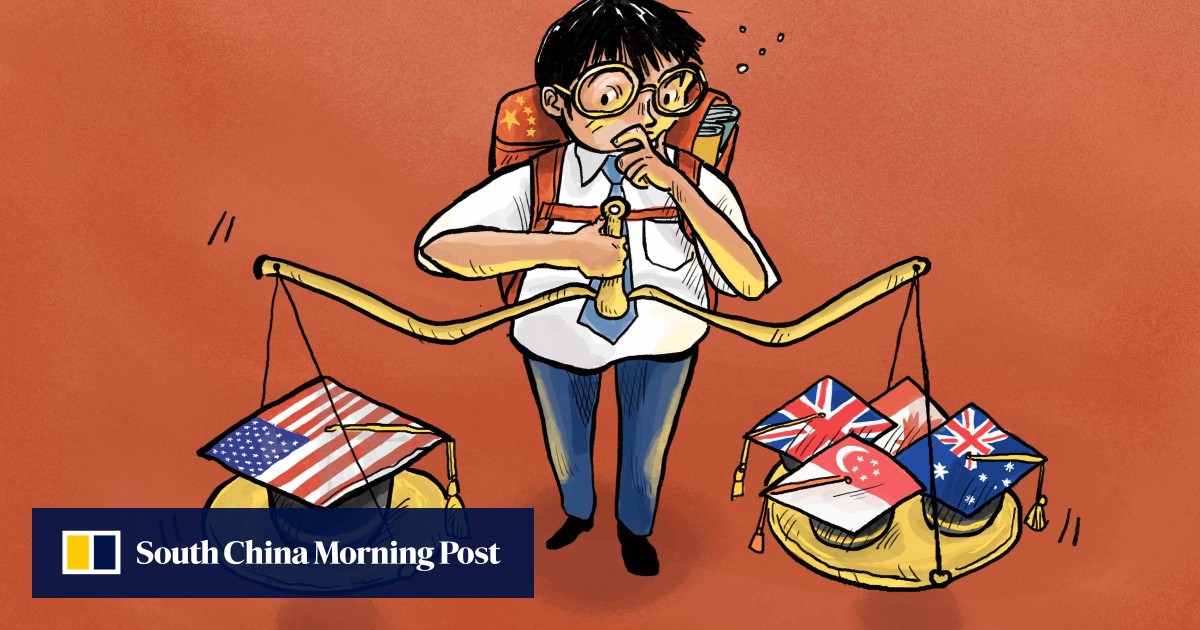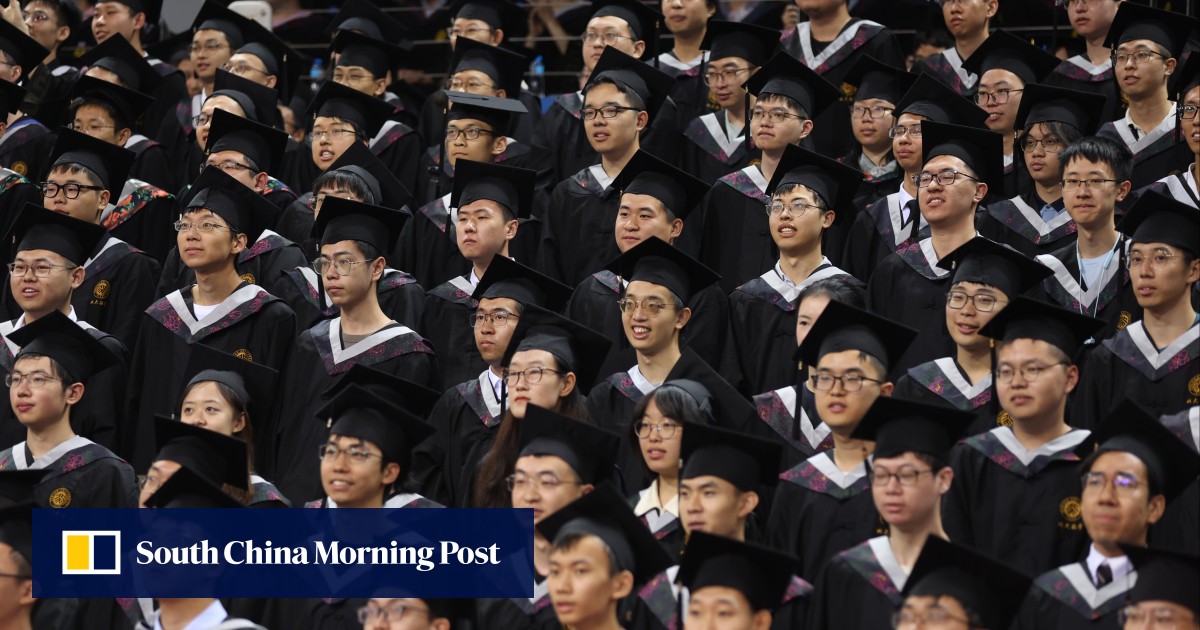
Middle-class parents in China long viewed overseas diplomas as the best path to success, so what has changed? And why are overseas students in an ‘increasingly awkward position’?
With her son’s future on the line, Shenzhen mother Eva Deng recently made a tough call that she never would have considered a few years ago – to let the 12-year-old, who had been studying at an international school for six years, attend a public junior high school.
Even though the boy had attained English fluency, Deng ultimately abandoned plans of sending him to study in Britain or the United States, and instead set her sights on China’s top universities for majors related to emerging science and technologies. Ideally, she hoped, his studies would focus on artificial intelligence.
This meant that her son would stop learning the national curriculum for England, and instead begin preparations to compete in domestic competitions for programming, maths and science – contests seen as significant for Chinese students to get into top high schools and universities in the country.
The decision by the human resource director in the southern Chinese metropolis reflects a broader shift among China’s middle-class parents who used to regard an overseas education as the best option for their kids.