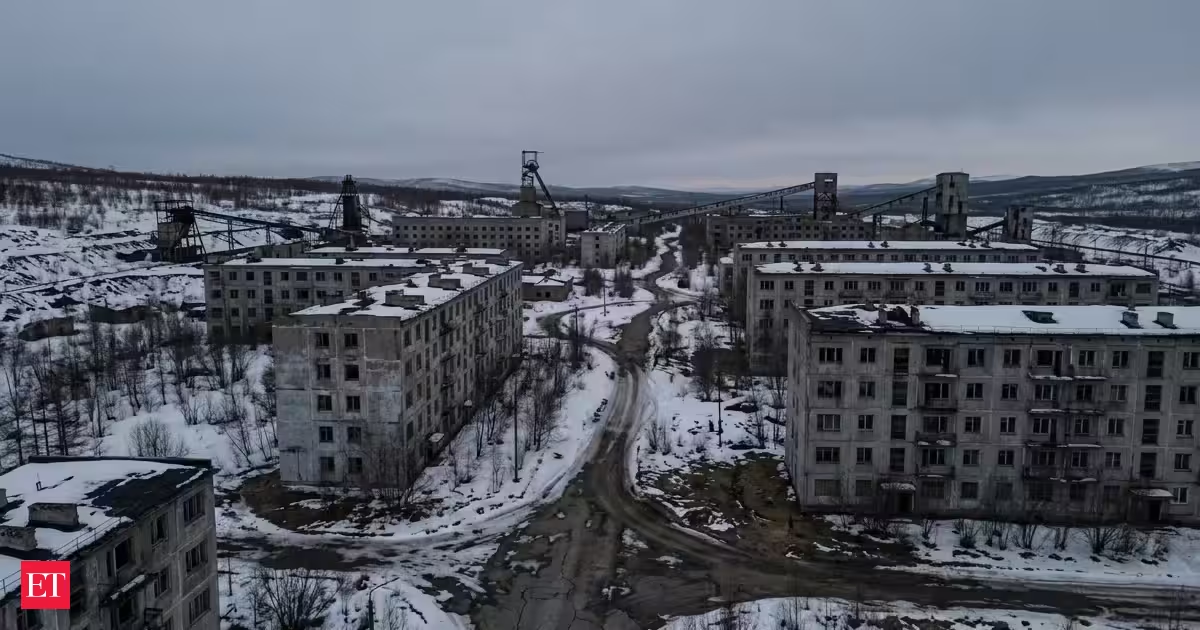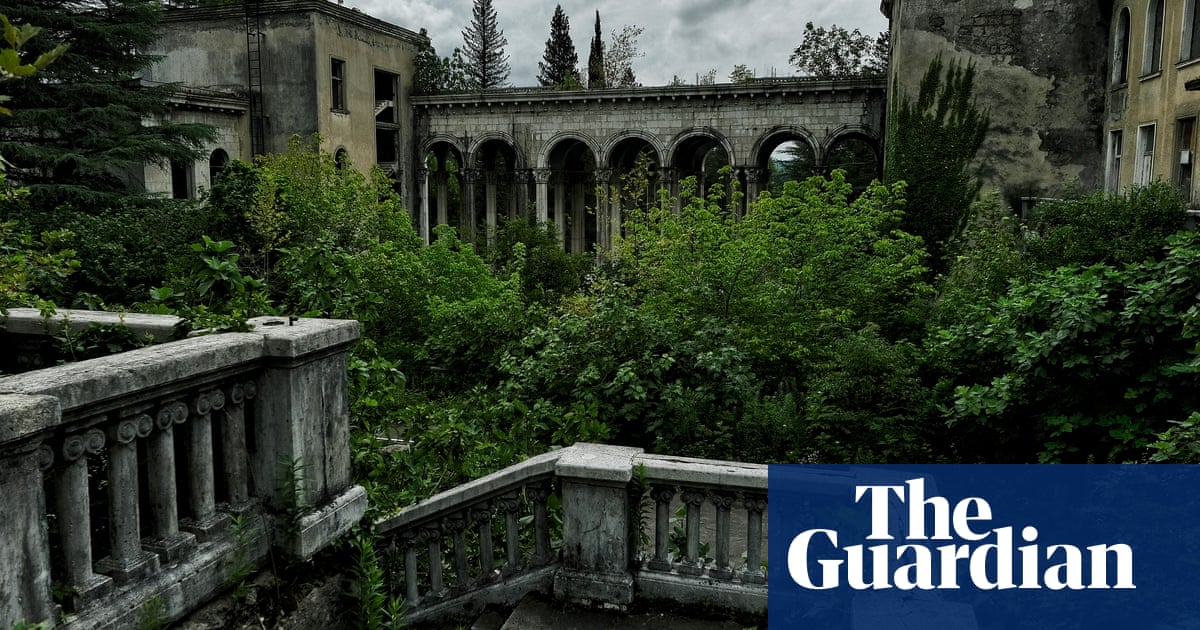
Tskaltubo enjoyed years of prosperity as a jewel of Soviet architecture. But after the collapse of the USSR in December 1991 the sanatoriums were abandoned, and in 1992 people fleeing the war in Abkhazia found refuge here. While efforts continue to restore the spa town to its former glory, silence and greenery prevail as a few families hold out amid the rubble
T
he right to rest for workers was enshrined in the 1936 constitution of the Soviet Union. Article 119 guaranteed “annual vacations with full pay for workers and employees and the provision of a wide network of sanatoriums”. Fourteen years earlier, the 1922 labour code had established that every worker was entitled to two weeks of annual leave and hundreds of sanatoriums were built across the vast territory that made up the Soviet socialist republics. These establishments, conceived as a combination of health resorts and medical centres, served as places for workers to rest and recuperate, thus helping to optimise their productivity.
Bath House No 8, located in Central Park where the hot springs spring forth, is the UFO-shaped Tskaltubo spa with a curved, circular roof and a central opening that lets in light.
In Georgia, Stalin’s native country, one of the Soviet Union’s leading spa towns was forged south of the Great Caucasus mountains. Tskaltubo’s radon mineral springs, with temperatures of 33-35C, could be used without prior heating and put the town in the spotlight. In 1920, the territory was nationalised and five years later the first facilities were built. In 1931, the Georgian Soviet socialist republic designated Tskaltubo as a premium spa complex and balneotherapy centre. In 1933, an ambitious plan for the spa resort was launched, arranging its infrastructure in a circle around the springs, and two further masterplans followed in the 50s and 80s. From the late 20s to the late 80s several hotels, nine bathhouses, 22 sanatoriums and a hydro-mineral research centre were built, many of them real gems of Soviet architecture.