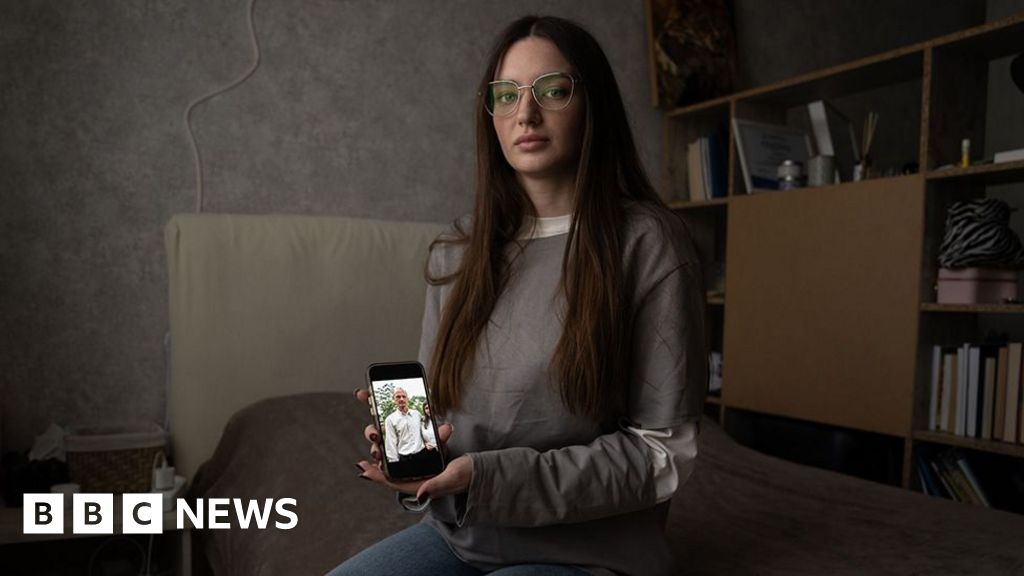
Tatyana Popovytch had contacted every agency she could think of. She had walked every step her son Vladislav could have taken after the Russians opened fire at his car, leaving him to flee with a bullet in his leg. She had looked in mass graves, reviewed pictures of the dead, watched exhumations. And after a month, she knew no more than when she had started.
Then a stranger called.
Serhii had just been released from a Russian prison in Kursk. At morning roll call, the prisoners could not see one another, but they could hear each person state their full name and home village. Serhii memorised as many names and places as he could – 10 in total, he said – and on 9 May 2022 he called Tatyana to say that he had heard her son's voice.
Like Vladislav, Serhii was a civilian captured from Bucha at the start of the war, when hundreds of civilians were taken from this area. Vladislav was 29 at the time. Now 32, he is still in the prison in Kursk. Serhii couldn't explain to Tatyana why he had been released and Vladislav hadn't. Tatyana was just glad to hear that her son was alive. "I was so overjoyed I lost the stutter I'd had since he was taken," she said.
Three years later, to the day, Tatyana was sitting in a café in Bucha, not far from where her son was abducted, looking over the scant evidence that he was still alive: two letters from him – short, boilerplate texts, written in Russian, telling her he was well fed and well looked after. Each letter had taken around three months to reach Tatyana, making it hard for her to feel very connected to her son at any point in time.