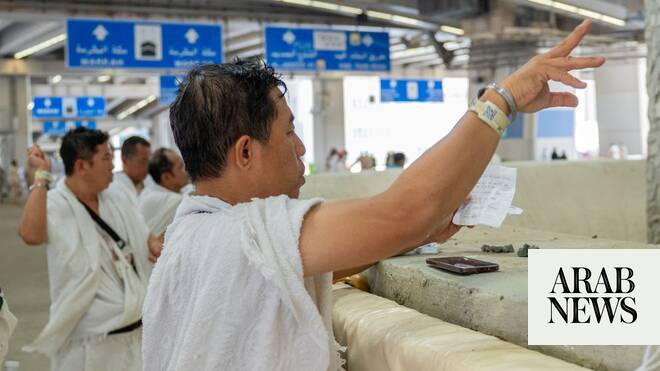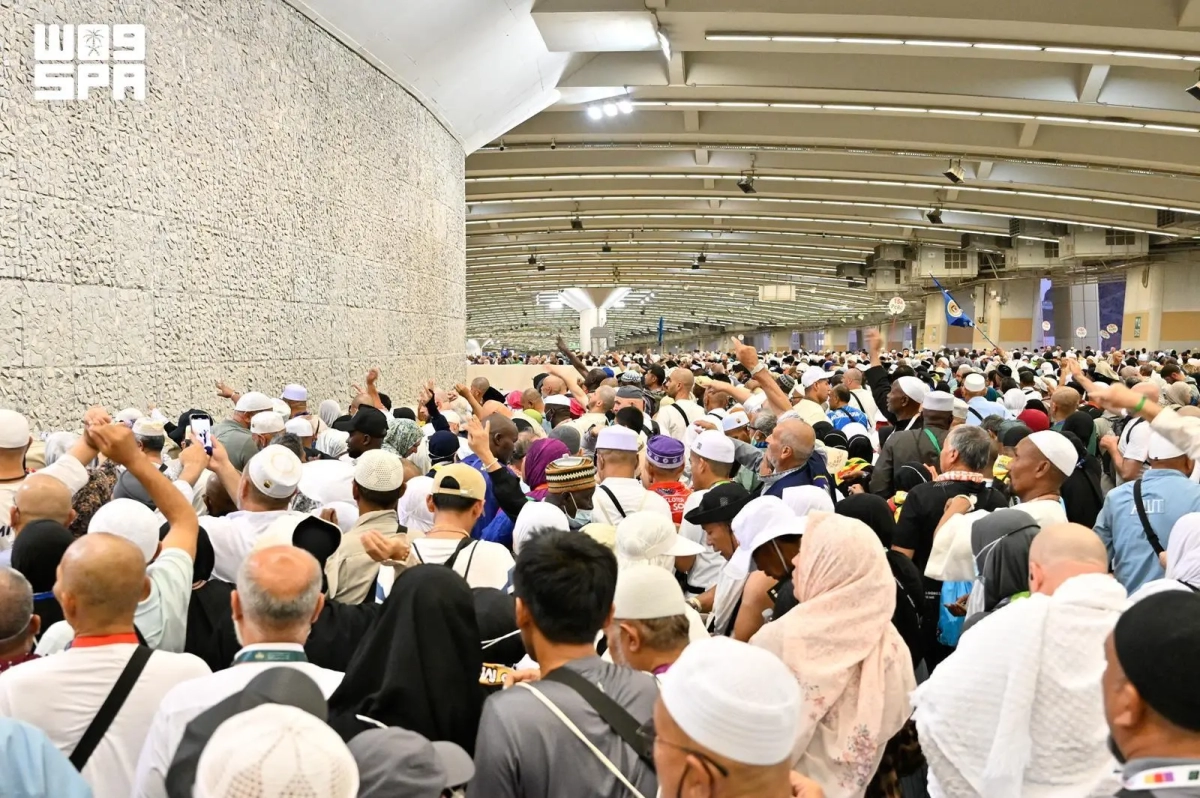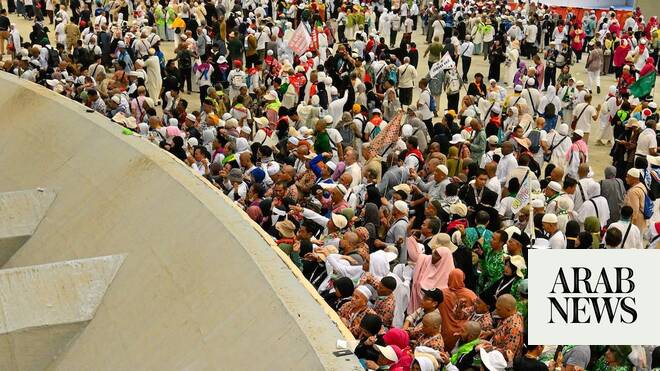
RIYADH: The early hours of Friday saw pilgrims start the journey from Muzdalifah to Mina, where they will perform one of Hajj’s most symbolic rituals — the stoning of the Jamarat, which marks the beginning of Eid Al-Adha and commemorates Prophet Ibrahim’s rejection of Satan.
Following a night of worship and rest, where the travelers combined and shortened the Maghrib and Isha prayers and collected pebbles for the ritual, the movement to Mina began shortly after midnight.
Saudi authorities orchestrated operations with meticulous precision, ensuring pilgrims moved in structured waves to prevent overcrowding and followed routes mapped out in advance by the Ministry of Hajj and Umrah in coordination with the Ministry of Interior.
Security personnel, crowd control units and volunteer guides lined the roads to ensure pilgrims — many of whom were elderly or physically exhausted — could travel safely.
Transportation was provided by a fleet of buses operating on strict schedules. Many people also used the Al-Mashaaer Al-Mugaddassah Metro, the dedicated Hajj-only rail system which loops between Mina, Arafat, and Muzdalifah and can carry up to 72,000 passengers per hour. According to Saudi Press Agency, the nine-station line significantly reduced surface congestion and supported the Kingdom’s strategy for a safe and sustainable Hajj.