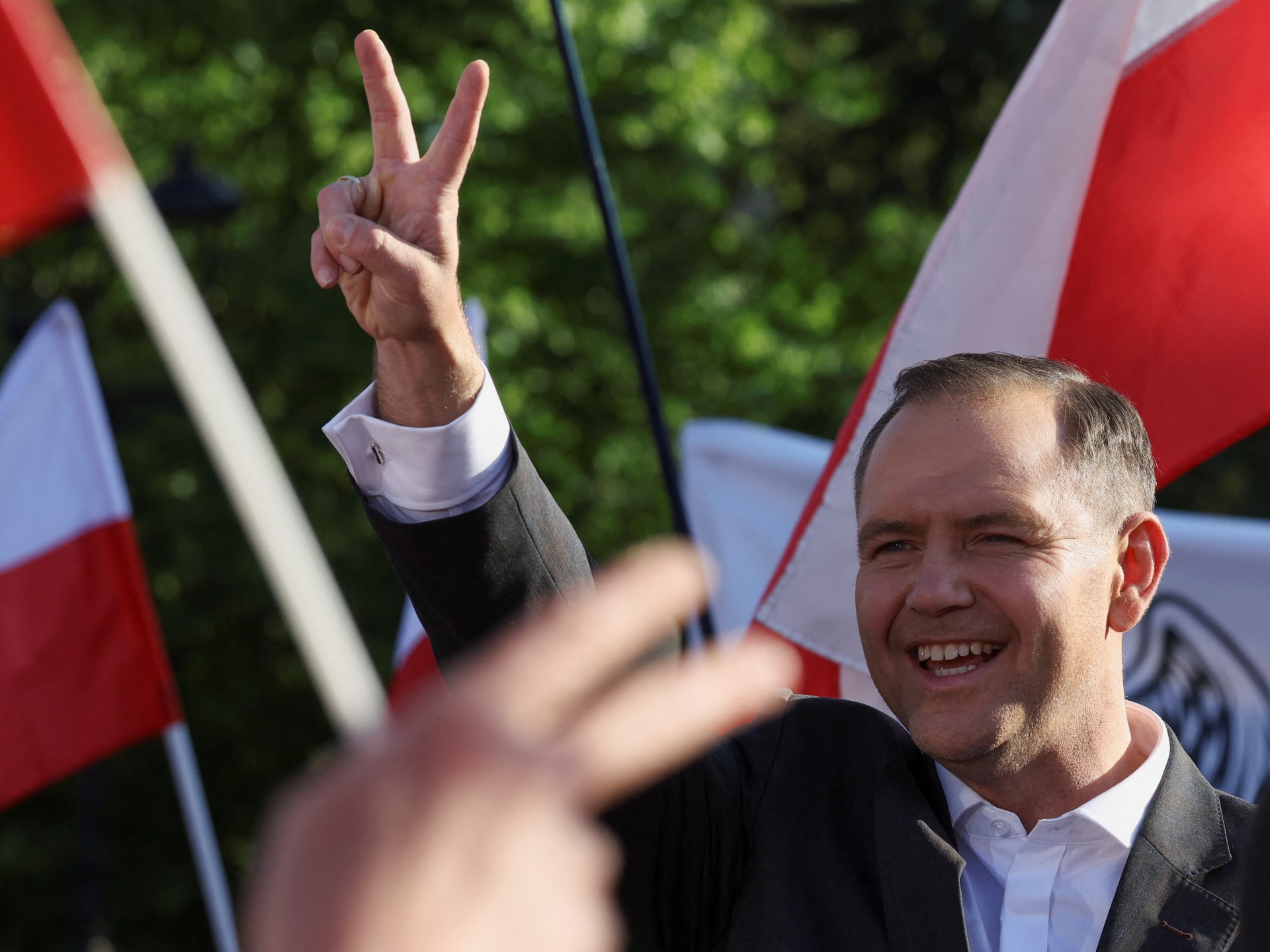
As some turn on Kyiv, Karol Nawrocki, a nationalist, says Poland and Ukraine must address ‘overdue historical issues’.
On May 30, the last day of Poland’s presidential campaign, Karol Nawrocki laid flowers at a monument that has long sparked controversy.
The 14-metre tall statue commemorating the Volhynian massacre depicts a crowned eagle, the symbol of Poland, with a cross shape cut out from its chest. In that cross, a child’s body is impaled on a trident, representing the Ukrainian coat of arms, the “tryzub”.
The statue was revealed in July 2024 in Domostawa, a village in southeastern Poland close to Ukraine’s border. It commemorates the ethnic cleansing of Poles by the Ukrainian Insurgent Army in the Polish-Ukrainian borderland between 1943 to 1945. While statistics vary, it is assumed that between 40,000 and 100,000 people perished in the massacre.
But before Domostawa accepted the monument, several cities, including Rzeszow, Torun and Stalowa Wola, refused to host it due to the brutality of the sculptor’s vision and in order not to damage relations with Ukraine.