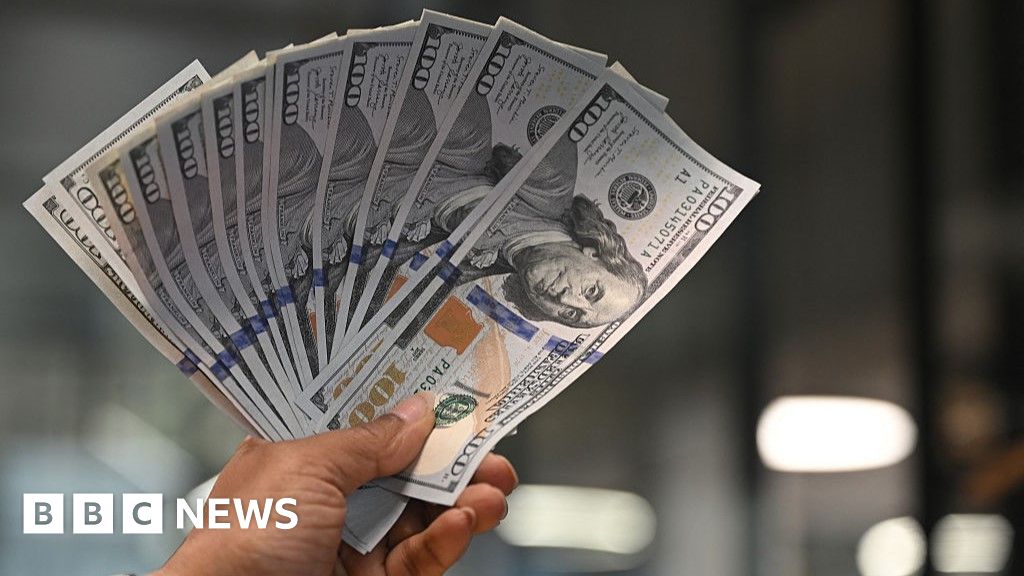
Tucked deep in Donald Trump's sprawling "One, Big, Beautiful Bill Act" is a clause that could quietly take billions from money sent abroad.
It proposes a 3.5% tax on remittances sent abroad by foreign workers, including green card holders and temporary visa workers such as those on H-1B visas. For India - the world's top remittance recipient - the implications are serious, say experts. Other major recipients include Mexico, China, the Philippines, France, Pakistan and Bangladesh.
In 2023, Indians abroad sent home $119bn (£88bn) - enough to finance half of India's goods trade deficit and outpace foreign direct investment, according to a paper by Reserve Bank of India (RBI) economists. Of this, the largest share came from the US. For millions of migrants, that includes the money wired to cover a parent's medicine, a nephew's tuition or a mortgage back home.
A blunt levy on remittances could skim billions from migrant workers, many of whom already pay taxes in America. The likely result? A rise in informal, untraceable cash transfers and a dent in India's most stable source of external financing.
India has remained the top recipient of remittances since 2008, with its share rising from 11% in 2001 to 14% in 2024, according to World Bank. India’s central bank says that remittances are expected to stay strong, reaching an estimated $160bn by 2029. The country's remittances have consistently hovered around 3% of GDP since 2000.