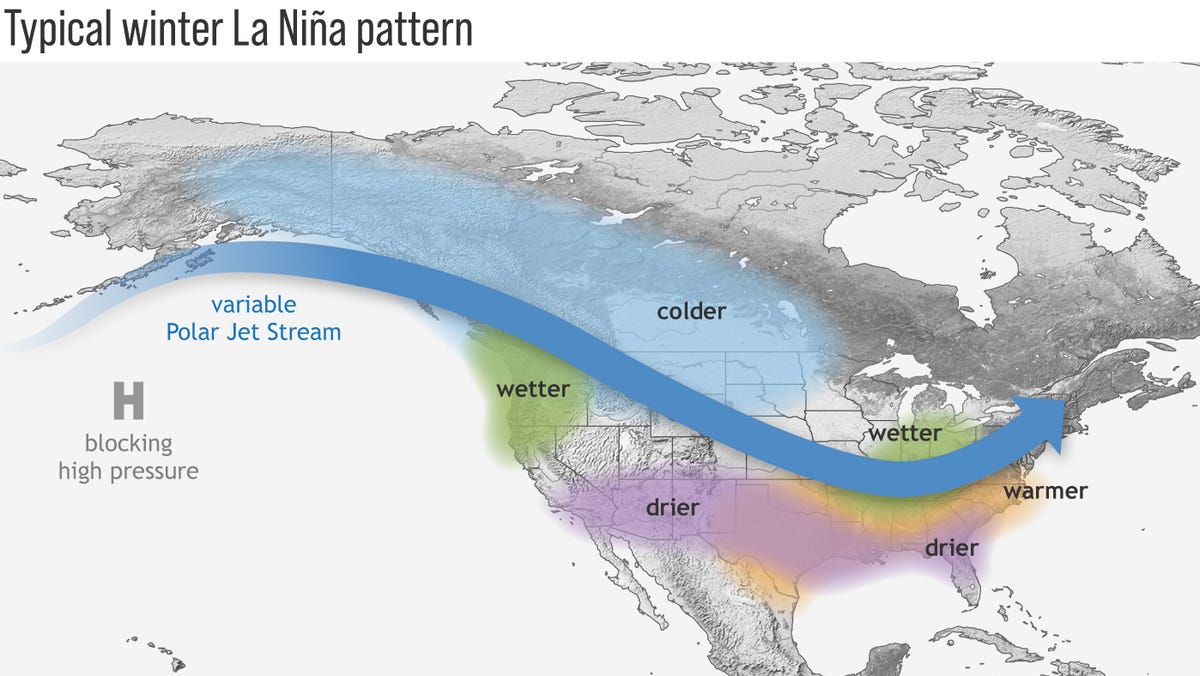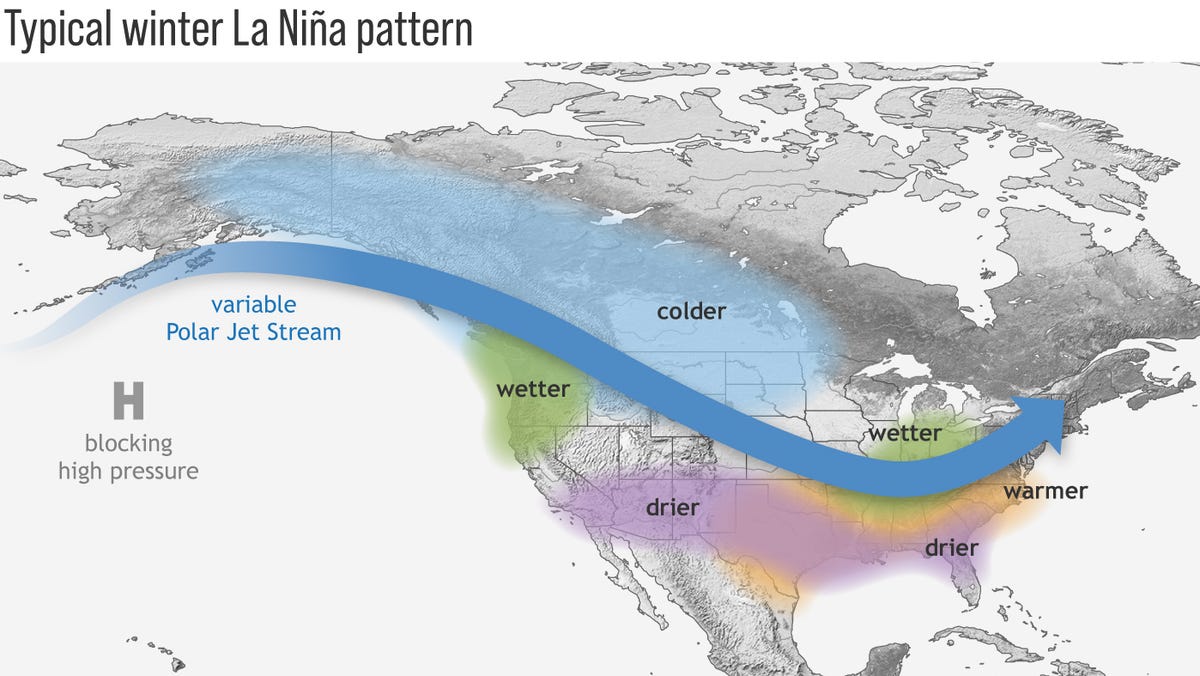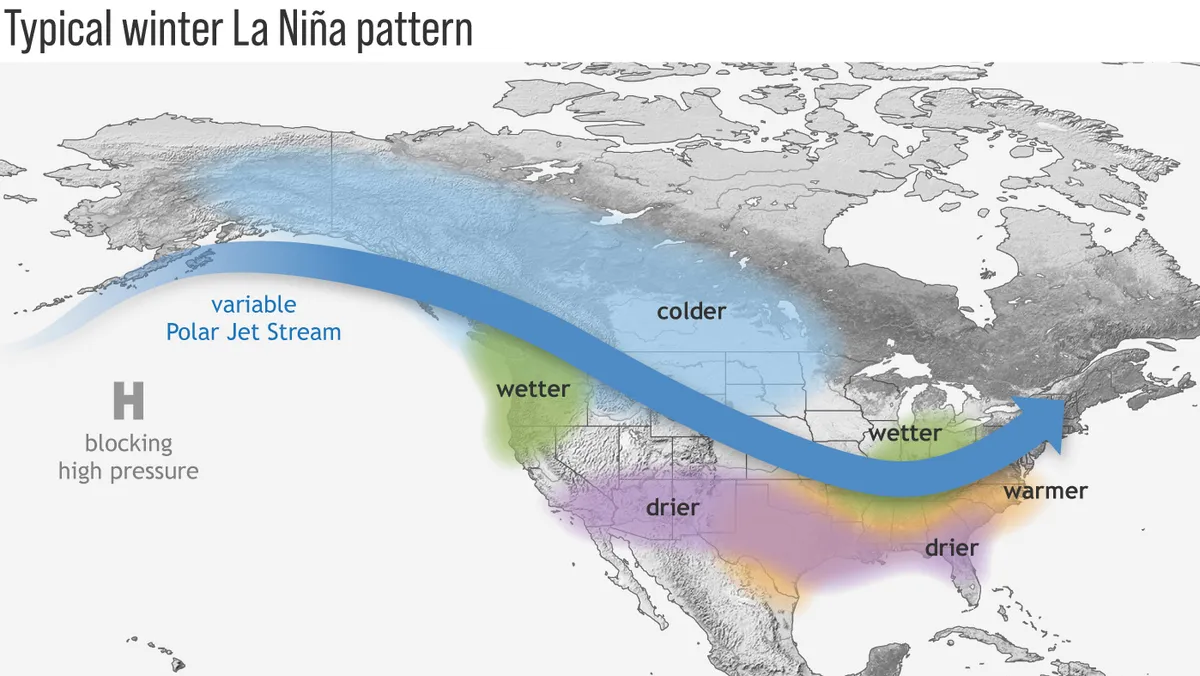
Most people associate La Niña with warmer winters or drought in the southern United States, but its influence stretches far beyond the winter months. When La Niña sets in during hurricane season, it has the potential to dramatically increase both the number and strength of tropical storms and hurricanes in the Atlantic basin.
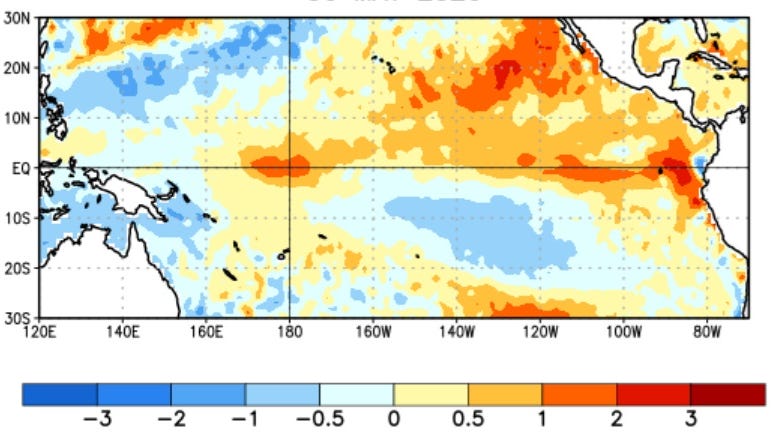
La Niña is part of the El Niño-Southern Oscillation (ENSO) cycle and is defined by lower-than-average sea-surface temperatures in the eastern Pacific Ocean near the equator. Although the phenomenon originates far from the Atlantic Ocean, it disrupts global weather patterns in a way that suppresses wind shear across much of the tropical Atlantic.
This matters because vertical wind shear -- the change in wind speed or direction with height - tends to prevent tropical systems from organizing. When shear is reduced, clusters of showers and thunderstorms are more likely to organize, strengthen and turn into tropical storms and hurricanes.
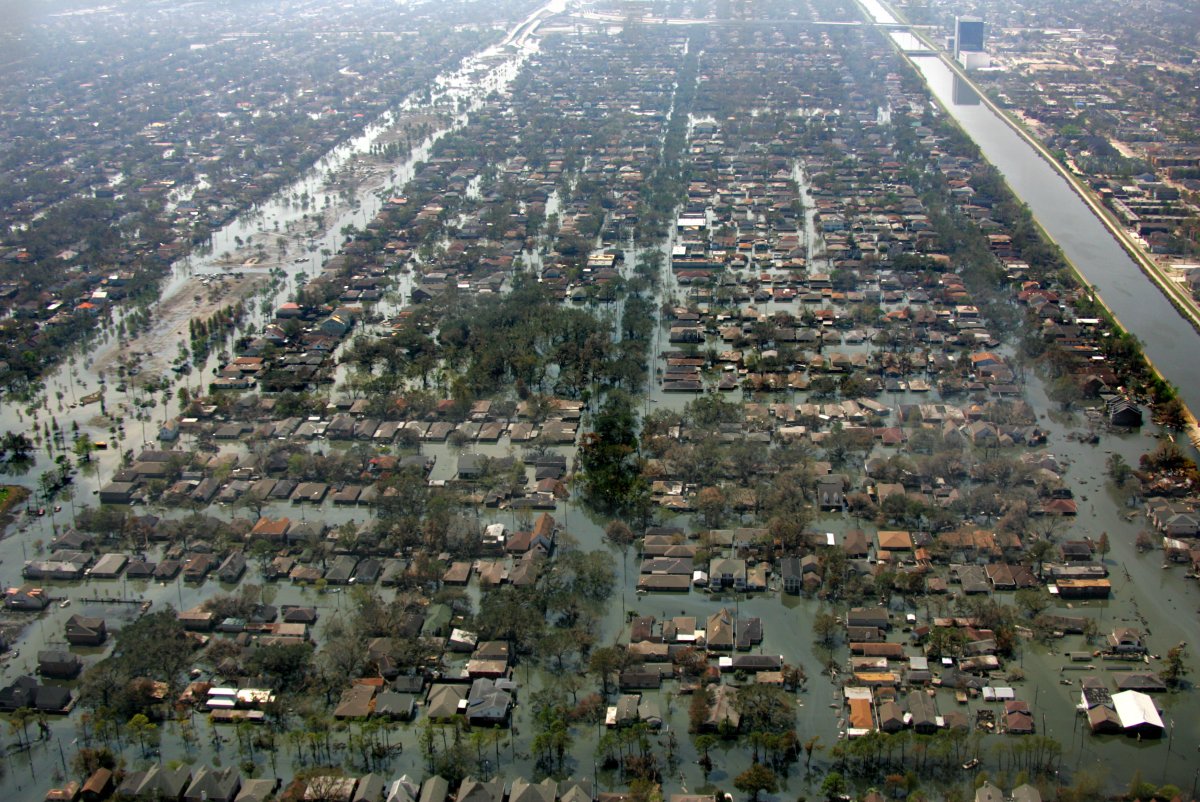
"La Niña increases the number of hurricanes that develop and allows stronger hurricanes to form," said AccuWeather Lead Hurricane Expert Alex DaSilva. "It also raises the chances for the continental U.S. and the Caribbean Islands to experience a hurricane."