BERLIN (AP) — German voters are choosing a new government in an election Sunday dominated by worries about the years-long stagnation of Europe’s biggest economy, pressure to curb migration and growing uncertainty over the future of Ukraine and Europe’s alliance with the United States. The center-right opposition is favored to win, while polls point to the strongest result for a far-right party since World War II.
Germany is the most populous country in the 27-nation European Union and a leading member of NATO. It has been Ukraine’s second-biggest weapons supplier, after the U.S. It will be central to shaping the continent’s response to the challenges of the coming years, including the Trump administration’s confrontational foreign and trade policy.
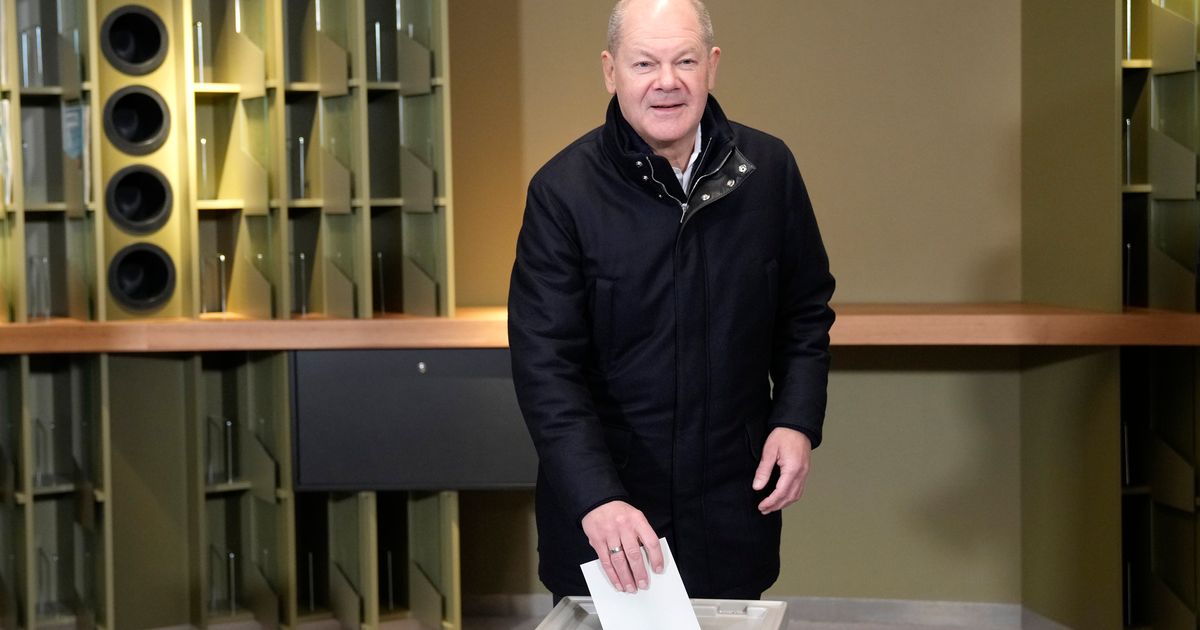
The top candidates, conservative front-runner Friedrich Merz and current Chancellor Olaf Scholz of the Social Democrats, voted within minutes of each other in different parts of the country on Sunday morning.
More than 59 million people in the nation of 84 million are eligible to elect the 630 members of the lower house of parliament, the Bundestag, who will take their seats under the glass dome of Berlin’s landmark Reichstag building.
Germany’s electoral system rarely produces absolute majorities, and no party looks anywhere near one this time. It’s expected that two or more parties will form a coalition, following potentially difficult negotiations that will take weeks or even months before the Bundestag elects the next chancellor.