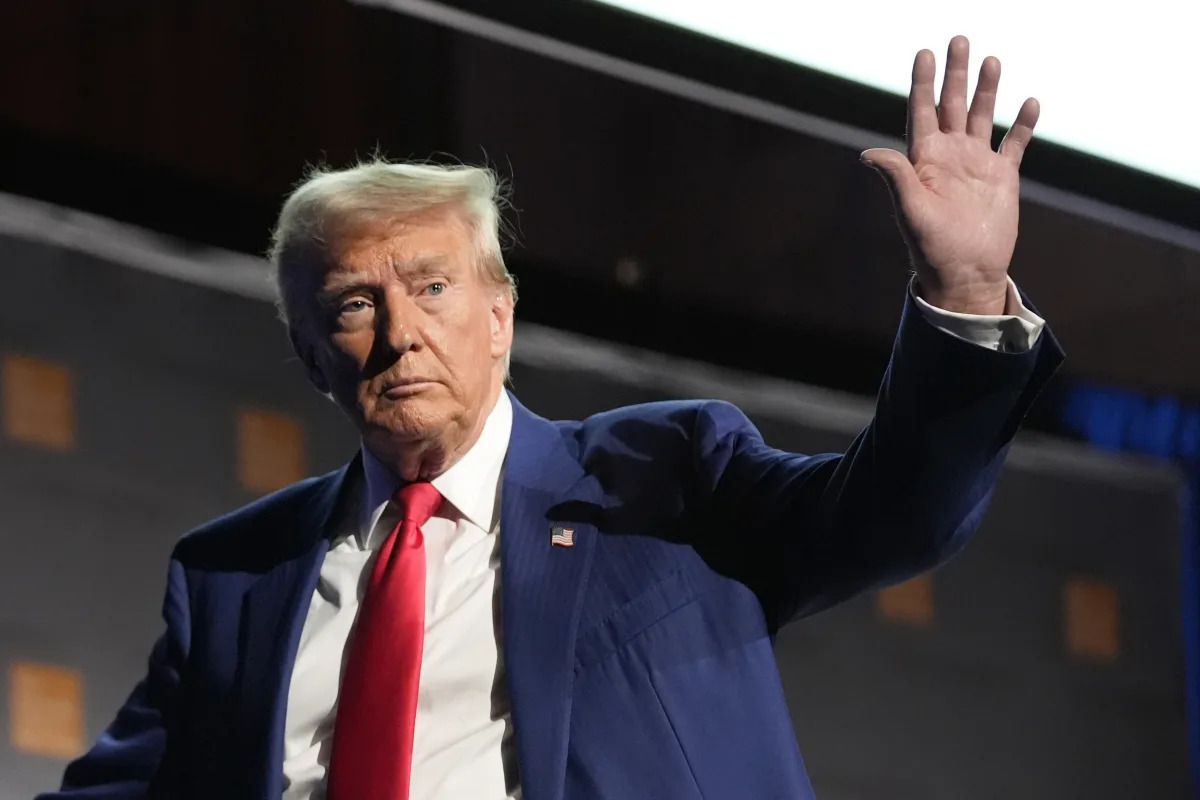
Many Americans have fond memories of the Trump economy that ran from 2017 to 2021. Inflation, interest rates, and gasoline prices were low; the stock market did well; and pre-COVID job and economic growth were solid.
The old Trump economy is a factor in the 2024 election, given that voters trust Donald Trump, the Republican presidential candidate, more on the economy than they trust his Democratic rival, Vice President Kamala Harris. And as usual, the economy is a top voter concern.
But if Trump wins a second term, anybody expecting a quick return to the Goldilocks economy of his first term is likely to be very disappointed. In a preview of Trump 2.0, Goldman Sachs estimated that the economy would shrink by half a percentage point during Trump’s first year if he imposed all of his policies, including new tariffs on imports and a business tax cut that pushed annual deficits higher. Harris’s plan, by contrast, would modestly boost GDP growth, according to Goldman.
During his first term, Trump benefited from benign economic trends dating all the way back to the Great Recession of 2008 and the slow but steady recovery that followed. The post-COVID economy is a different animal with stronger inflationary pressures, more protectionism, costlier energy, and more global turmoil likely to produce shocks. Those forces will dominate the economy during the next four years no matter who is the US president.