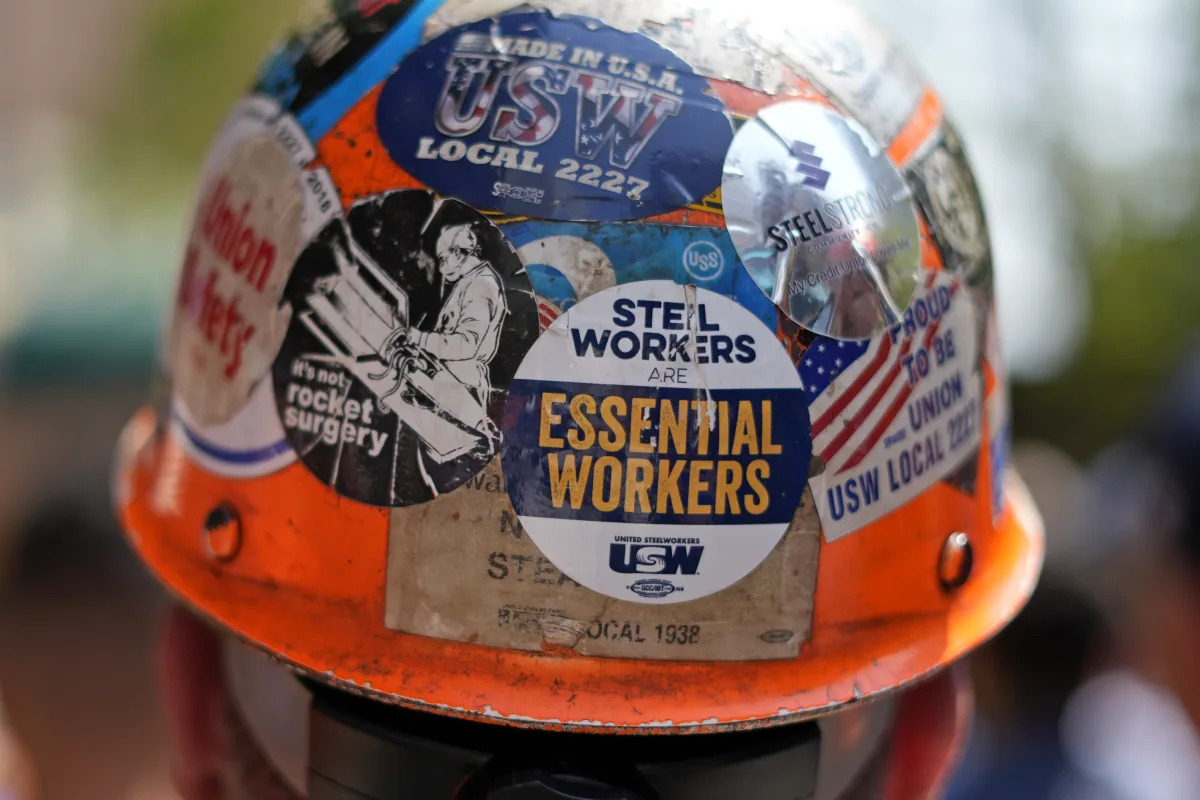
It seems self-defeating. Unionized steelworkers are effectively blocking the purchase of US Steel by Japan’s Nippon Steel, leaving a shrunken icon of the American heartland with no good options. US Steel CEO David Burritt says without the buyout, his company will have to close unionized factories and relocate from Pittsburgh to a non-union Southern state.
The whole matter, however, is distorted by election year politics, and there’s still a way for the deal to happen if Nippon doesn’t lose patience with American idiosyncrasies. President Joe Biden, Vice President Kamala Harris, and Republican presidential nominee Donald Trump all say they oppose the deal, but that could change once the election is over and the political ramifications subside.
US Steel began looking for a buyer last year to scale up in a market that’s now dominated by giant Chinese producers. Domestic firm Cleveland-Cliffs offered $7.4 billion for the firm, but a few months later, Nippon offered $14.9 billion, with the premium indicating a strong interest in entering the US market. US Steel accepted the far superior Nippon offer and said it expected the deal to close in 2024.
The steelworkers union, however, favored the Cleveland-Cliffs deal, believing that it would provide better protection for union jobs and trashing the Nippon offer as a token commitment to jobs that still leaves room for layoffs and plant closures.