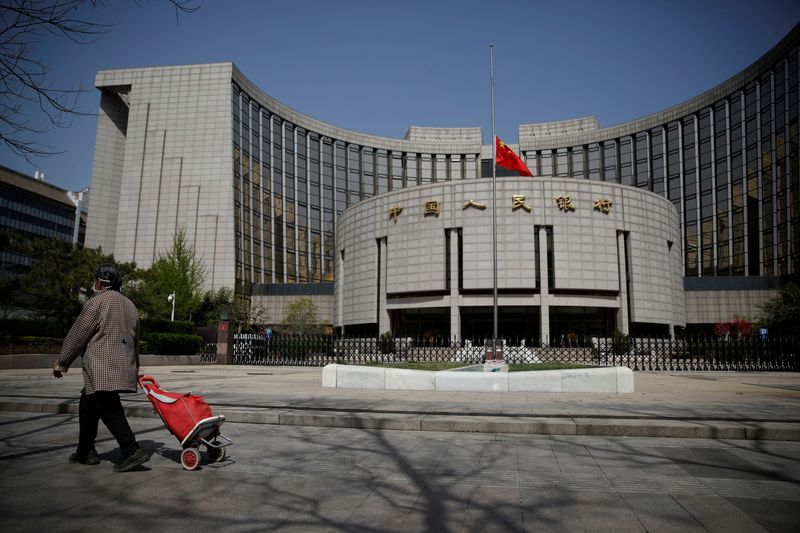
SHANGHAI (Reuters) - China's central bank surprised markets for a second time this week by conducting an unscheduled lending operation on Thursday at steeply lower rates, suggesting authorities are trying to provide heavier monetary stimulus to prop up the economy.
The medium-term lending facility (MLF) operation comes after the central bank cut several benchmark lending rates on Monday, just days after a top leadership meeting, which had outlined other major reforms.
The People's Bank of China (PBOC) issued 200 billion yuan ($27.5 billion) in one-year loans under its MLF at 2.30%, down 20 basis points from its previous MLF loan, the bank said in a statement.
The central bank also injected 235.1 billion yuan into markets through seven-day reverse repos at 1.70% and said the cash injection through the short-term instrument was to "maintain reasonably ample month-end banking system liquidity conditions," according to the statement.
The MLF rate cut was "basically a reaction to the sharp declines in the stock market," said Xing Zhaopeng, senior China strategist at ANZ. China's benchmark indexes have been falling this week.